
The Secret Heart of the Yucatán: Jungles, Jaguars, and the Communities That Protect Them
The Yucatán Peninsula, famous for its turquoise Caribbean waters and ancient Mayan ruins, holds a deeper, more profound secret: its vast, resilient forests. Far more than just a backdrop, this jungle is a vibrant, living ecosystem, protected by the very communities that have cultivated a relationship with it for millennia.
A Unique Forest Built on Stone and Water
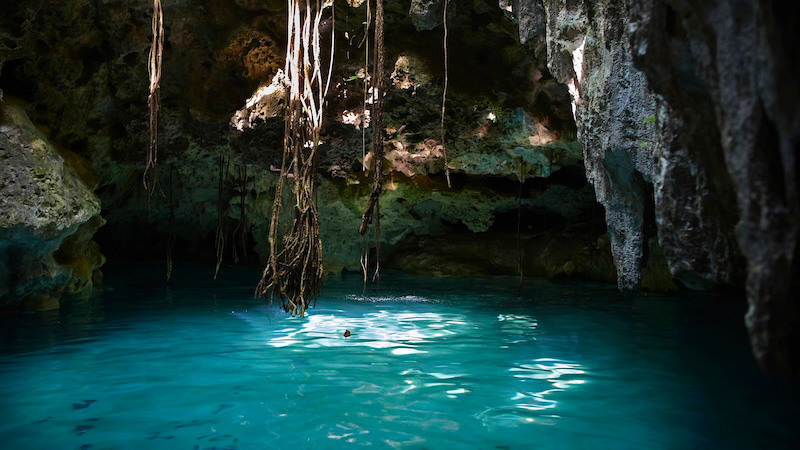
When people think of tropical rainforests, they often imagine endless rain. The Yucatán’s forests, however, are unique. The peninsula's porous limestone bedrock gives rise to tropical dry forest and semi-deciduous jungle. Instead of surface rivers, life here is sustained by the world’s largest underground aquifer—a massive network of interconnected caves and sinkholes known as cenotes.
This geological foundation is the key to the ecosystem's survival. The trees have adapted to shed leaves during the dry season, conserving water until the rains recharge the groundwater supply. This unique cycle supports extraordinary biodiversity found only in this region.
Spider Monkey and Jaguar Abound
The Yucatán jungle is a critical habitat for some of the Americas' most charismatic fauna. The list of residents is vast but include:
- The elusive Jaguar (Panthera onca) thrives here, with the peninsula hosting one of Mexico’s most significant populations.
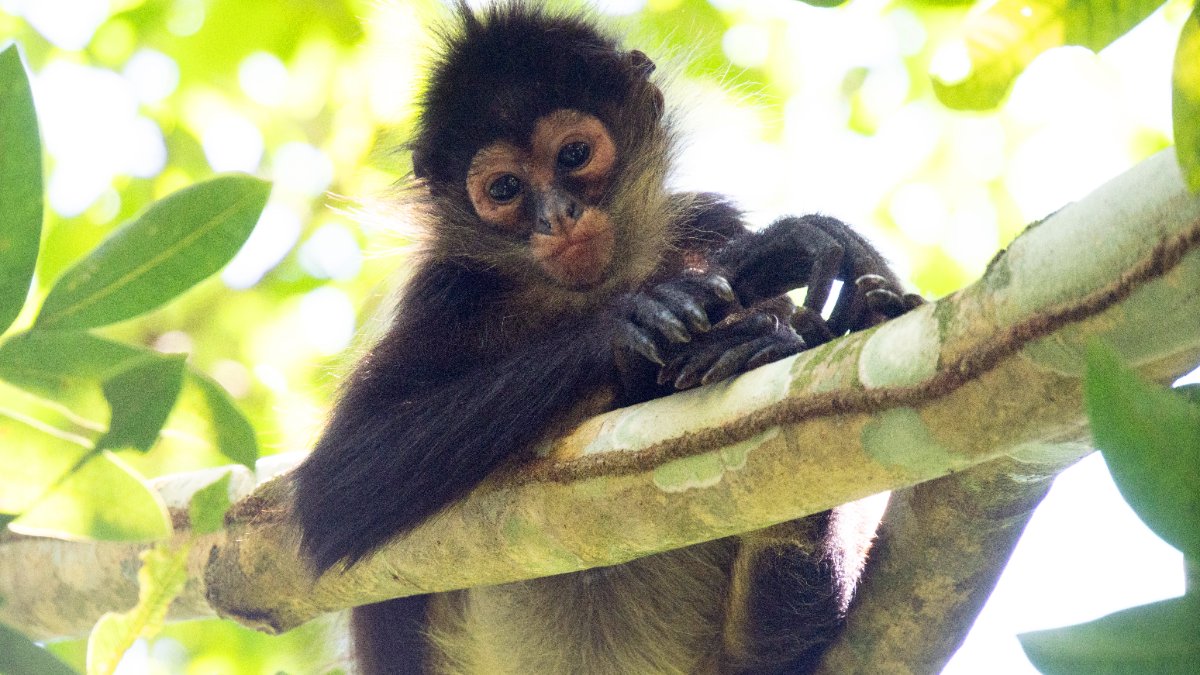
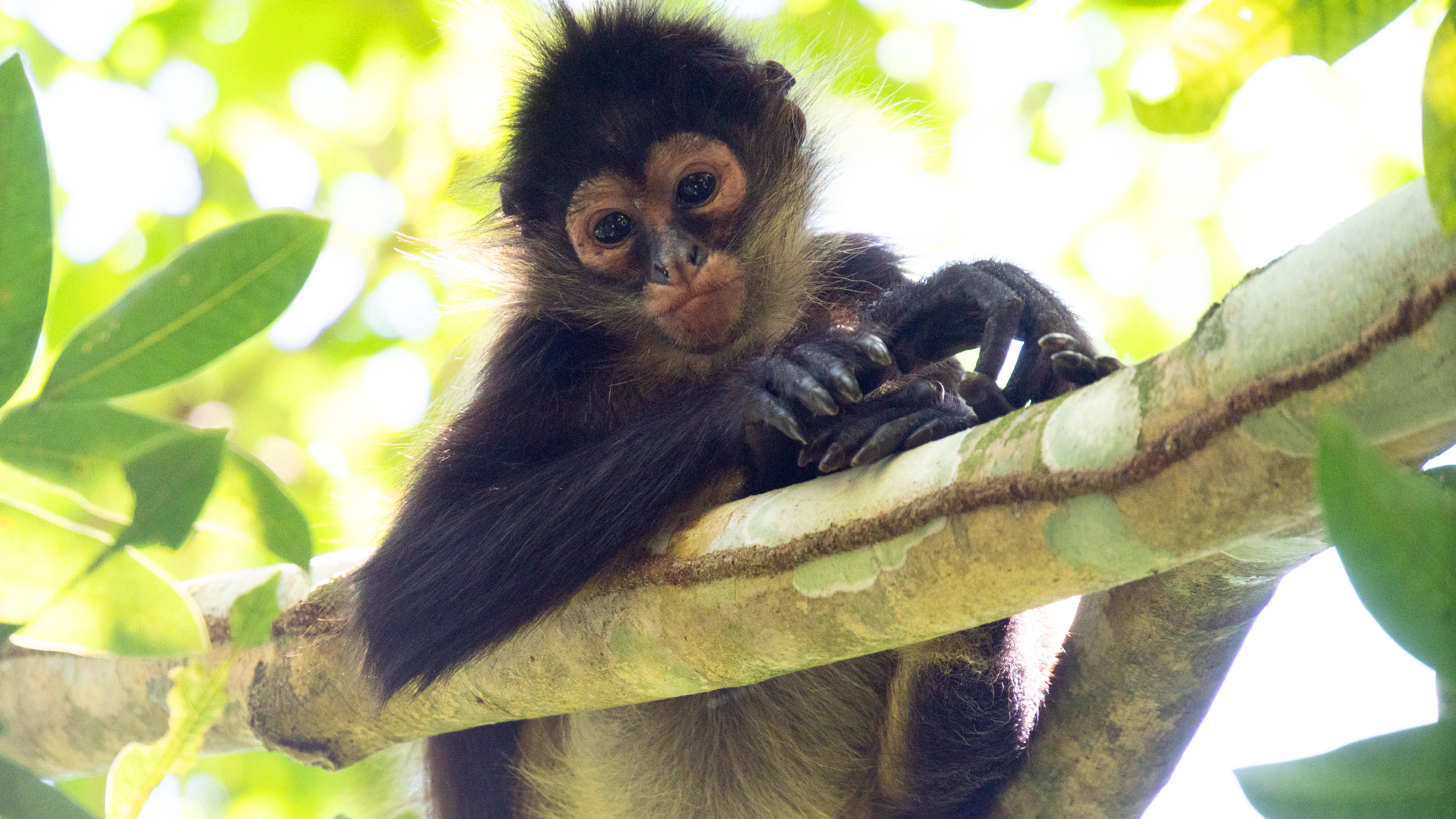
- The Black Howler Monkey (one of the loudest animals on land) and acrobatic and very cute Spider Monkeys.
- The curious White-nosed Coati (or tejón), a relative of the raccoon, often seen foraging in social, noisy bands with their long tails held high. Another key forest dweller is the Agouti (or Sereque). This small, quick rodent is often called the "gardener of the forest" because it is a vital seed disperser, burying nuts and fruits which then grow into the next generation of trees. You may also spot the shy Baird’s Tapir, and the pig-like Peccary.
- The emblematic Turquoise-browed Motmot (Pájaro Toh), arguably the single most beloved and symbolic bird of the Yucatán Peninsula today, the Keel-billed Toucan and the Ocellated Turkey (Pavo de Monte).
The Guardians of the Land: What is an Ejido?
Central to the enduring protection of these forests are the ejidos.
An ejido is a communal landholding system unique to Mexico. The land is not privately owned by individuals, but rather held collectively by a community of farmers and residents. Decisions about how the land is used—whether for farming, housing, or conservation—are made democratically by the ejidatarios (community members).
In the Yucatán, vast swathes of jungle are under ejidal control, making these local communities the primary stewards of the natural resources.
Community-Led Conservation in Action
Across the peninsula, countless ejidos have chosen to protect their natural heritage over short-term economic gain. Many practice sustainable forestry, where they harvest wood products like chicle (the base for natural chewing gum) or specific timber, ensuring the forest's long-term health.
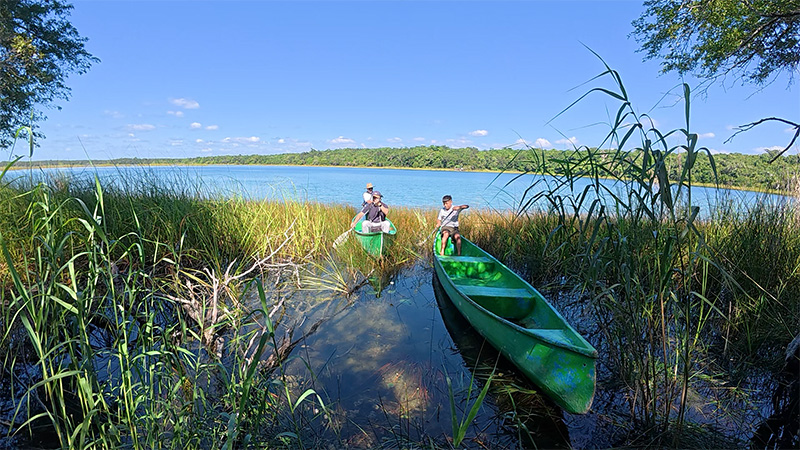
Crucially, many ejidos have also pivoted to ecotourism. By offering guided nature walks, showcasing wildlife, and sharing traditional Mayan knowledge of medicinal plants and the forest, they have created sustainable livelihoods that depend directly on keeping the ecosystem intact and thriving.
The Collision of Progress: The Tren Maya's Impact
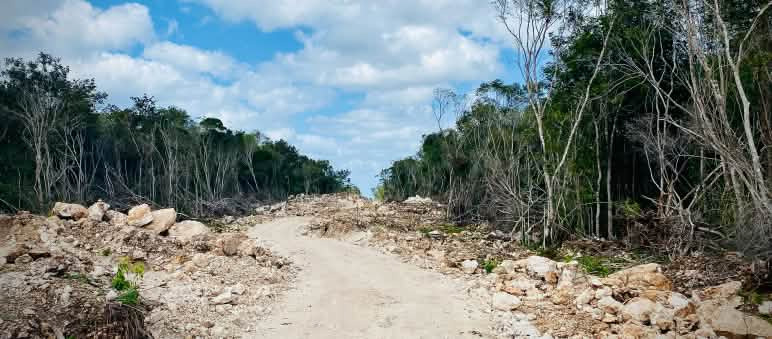
Despite the best efforts of conservationists and communities, the forests has faced a massive, irreversible challenge: the Tren Maya (Maya Train). This large-scale, 1,554-kilometer railway project aims to boost tourism and development across the peninsula.
While the project promises economic growth, its environmental toll has been significant and highly controversial:
- Massive Deforestation: Environmental analyses indicate that construction has resulted in the clearing of anywhere from 6,000 to over 10,000 hectares of forest. While the government admitted to the removal of millions of trees, conservation groups estimate the total number felled or removed is closer to 9 to 10 million.
- Habitat Fragmentation: The railway line acts as a permanent barrier, severing biological corridors vital for species like the Jaguar. This fragmentation isolates populations, threatening their long-term genetic diversity and survival.
- Damage to the Cenote System: In some sections, particularly along the Riviera Maya coast, the elevated tracks are supported by an estimated 15,000 steel pilings driven deep into the fragile limestone karst. This has resulted in the physical piercing and contamination of cenotes and ancient cave systems with steel and spilled concrete. Mexico's Environment Ministry formally acknowledged damage to at least eight caverns and cenotes due to the construction.
- Numerous ejidos and Mayan communities have filed dozens of injunctions (amparos) against the construction, citing violations of their human rights, environmental law, and the right to be properly consulted under international standards. They have spoken out against processes that they say fail to respect Mayan self-determination and strip them of the forest heritage they rely on.
Providing a voice for community conservation
Facing rapid development, the Yucatán Peninsula, like many regions globally, struggles with escalating deforestation. Can Canopi's support for community-led regenerative tourism offer Mayan communities both a voice and vital funding to counter these pressures and protect the Yucatán forests?
Our hope is that by connecting visitors from the Canopi website to their community-led ecotourism projects, we help create an economic model where the survival of the forest, its fauna, and the cenotes is intrinsically linked to the prosperity of the community, creating a true win-win model that ensures longevity in the conservation of the forests.