
Ocean Restoration Travel The Complete Guide 2026
Ocean Restoration Travel The Complete Guide 2026
How to Restore Coral Reefs, Mangroves and Marine Ecosystems — While Seeing the World
The ocean covers 71% of the Earth's surface. It produces more than half the world's oxygen. And right now, it's in serious trouble.
Coral reefs — the rainforests of the sea — have lost 50% of their cover since the 1950s. Mangrove forests, which protect coastlines and sequester carbon at rates four times higher than tropical rainforests, are disappearing. Marine biodiversity is collapsing in ways scientists are only beginning to understand.
But there's a different kind of travel emerging — one where your trip is part of the solution.
Ocean restoration travel puts you in the water alongside marine biologists and conservation teams, actively planting coral fragments, restoring mangroves, and protecting the marine ecosystems that the entire planet depends on. You don't just visit a reef. You help rebuild it.
This guide covers everything you need to know: what ocean restoration travel is, what to expect, the best experiences worldwide, how to choose a legitimate program, and how to book.
What Is Ocean Restoration Travel?
Ocean restoration travel is a form of regenerative travel where your trip directly contributes to the active restoration of marine ecosystems — rather than simply minimizing your impact on them.
It goes beyond eco-tourism. Eco-tourism might mean staying in a sustainable lodge or choosing a boat operator who doesn't anchor on coral. That's harm reduction. Ocean restoration travel is active repair.
In practice, it looks like this:
- Coral reef restoration: You dive or snorkel alongside marine biologists, attaching coral fragments to reef structures, removing invasive species, and monitoring reef health.
- Mangrove planting: You work with local conservation teams to plant and care for mangrove seedlings in coastal ecosystems that protect shorelines and sequester carbon.
- Seagrass restoration: You help replant and monitor seagrass meadows — critical nurseries for marine life and one of the ocean's most effective carbon sinks.
- Marine biodiversity surveys: You collect data on fish populations, coral cover and species diversity, contributing to long-term scientific monitoring programs.
- Ocean cleanup: You remove ghost fishing gear, microplastics and debris from reef systems and coastal areas.
The key difference from traditional volunteering: these programs are led by credentialed marine biologists, tied to long-term conservation projects with measurable outcomes, and designed for travelers — not just scientists.
Why Ocean Restoration Matters More Than Ever
Coral Reefs Are Running Out of Time
Coral reefs support approximately 25% of all marine species — yet they cover less than 1% of the ocean floor. They are among the most biodiverse and most threatened ecosystems on the planet.
The threats are relentless: ocean warming triggers mass bleaching events. Ocean acidification weakens coral skeletons. Pollution, overfishing and coastal development degrade reef systems before they can recover.
The 2024 Global Coral Bleaching Event was the fourth mass bleaching event ever recorded — and the most widespread. Scientists estimate that without active intervention, we could lose the majority of the world's coral reefs by 2050.
Active Restoration Works
Here's the hopeful part: coral restoration science has advanced dramatically in the last decade. Coral nursery programs — where coral fragments are grown in underwater nurseries and then transplanted to degraded reef areas — have demonstrated real results.
Programs like those Canopi partners with in Bali, Indonesia have planted tens of thousands of coral fragments, achieving survival rates that exceed natural reef recruitment. Coral reef restoration projects in Southeast Asia and Latin America have shown that degraded coastlines can be rebuilt within years, not decades.
Your participation matters more than you think. More hands, more awareness and more coral fragments planted. More eyes on the water, more data collected. More funding reaching the projects doing the work. It's a compounding effect where the oceans win.
What to Expect on an Ocean Restoration Trip
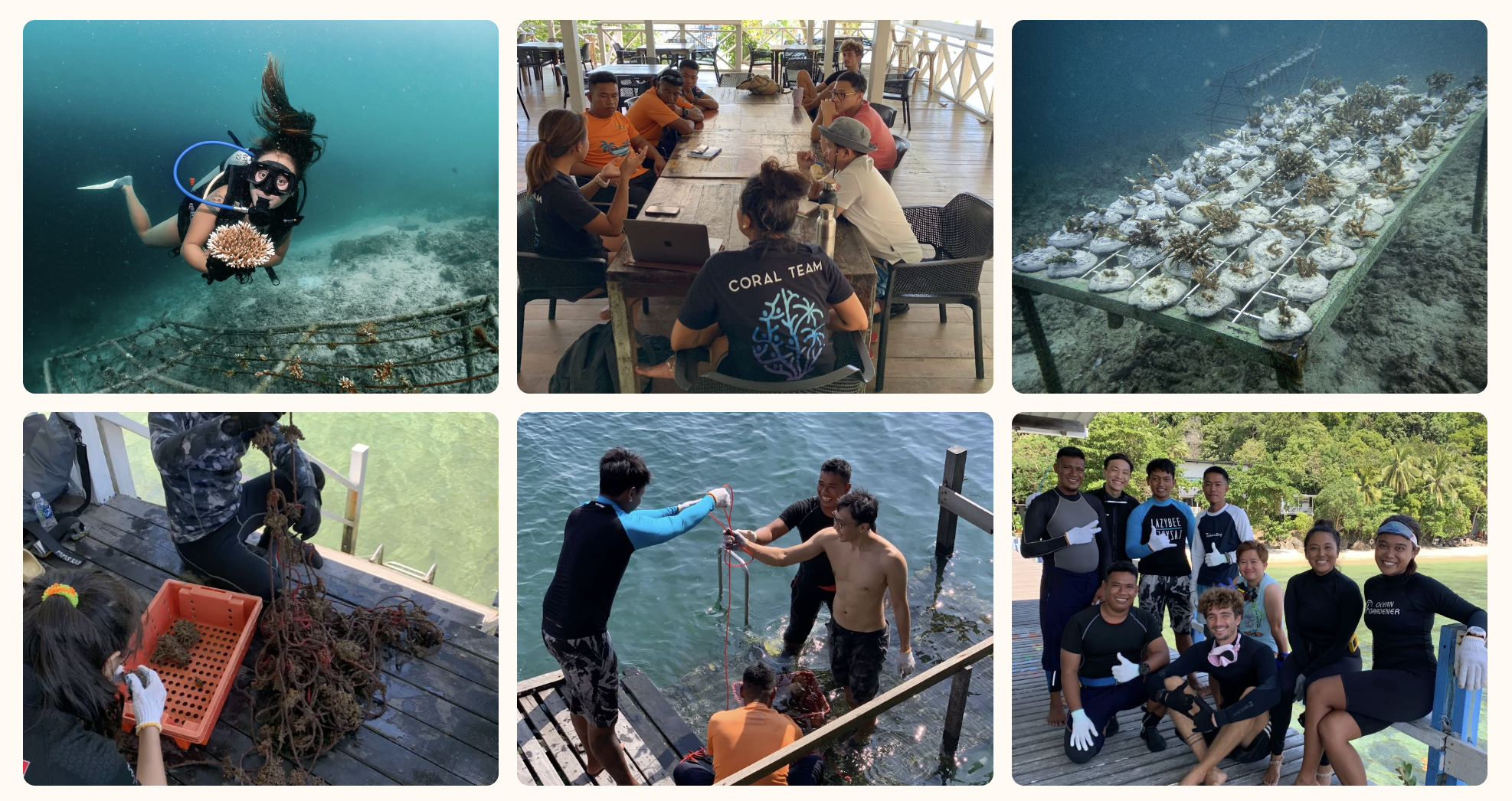
Ocean restoration experiences vary in intensity, skill requirement and focus. Here's what most programs have in common.
Before You Go
Most programs include pre-trip educational materials: background on the reef or marine ecosystem you'll be working in, the species you'll encounter, and the restoration techniques you'll be using. Some include video tutorials for the in-water work.
A Typical Day in the Field
Your day might look something like this:
- Morning — Briefing: Review the day's objectives with the lead marine biologist. Which nursery structures need checking? How many fragments to transplant? What data to collect?
- In the water — Restoration work: Depending on the program, you may be snorkeling, freediving or scuba diving. You'll work in small groups: attaching coral fragments, removing algae from nursery structures, photographing coral health, counting fish species.
- Afternoon — Data & analysis: Log what you observed and planted, contributing to the project's long-term dataset. Many programs share this data publicly — your observations become part of the scientific record.
- Evening — Community: Educational sessions, presentations from the conservation team, and the company of like-minded travelers who came to do the same thing you did.
Skill Requirements
This varies by program — and there's something for everyone:
- Snorkeling programs: Accessible to anyone comfortable in the ocean. No certifications needed. Great entry point for first-timers.
- Freediving programs: Some programs prefer participants who can freedive comfortably to 5–10 metres for longer work windows.
- Scuba programs: A PADI Open Water certification (or equivalent) is typically required. Some programs include certification as part of the experience.
Don't let certification status stop you. There are excellent ocean restoration experiences for non-divers, and every program lists exactly what's required before you book.
The Best Ocean Restoration Experiences in 2026
🇲🇽 Coral Reef Restoration Course — Cozumel, Mexico
- Best for: First-timers and experienced divers alike
- Duration: 3–7 days
- Skill level:Beginner to intermediate (snorkel or scuba)
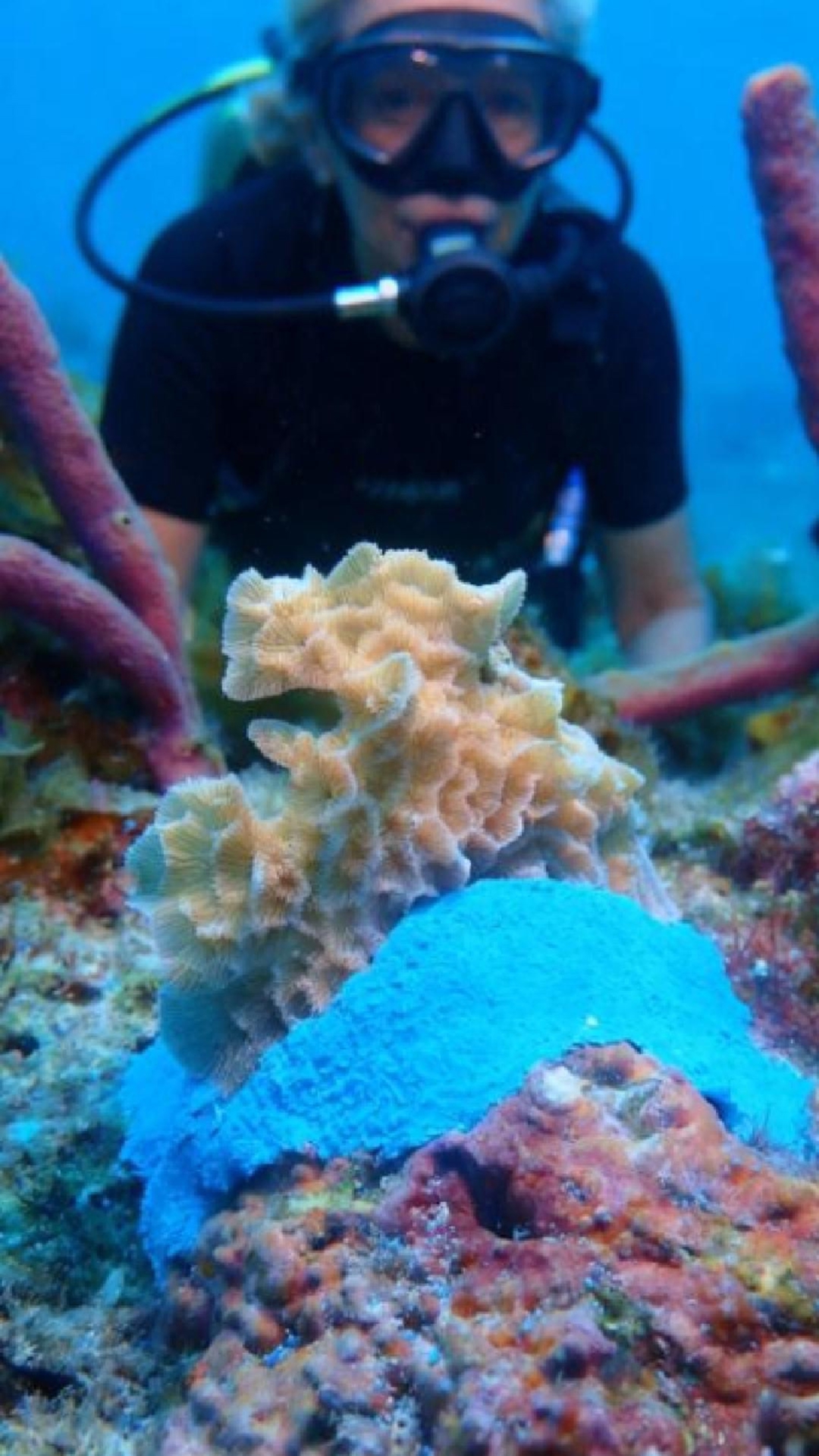
Cozumel sits on the Mesoamerican Barrier Reef — the second-largest coral reef system in the world. Despite decades of damage from tourism, bleaching and storms, active restoration programs here are producing remarkable results.
Canopi's Coral Reef Restoration Course in Cozumel partners with expert marine biologists who have been running reef restoration in the region for years. You'll work in underwater coral nurseries, learn to identify coral species, transplant fragments to degraded reef sections, and contribute to long-term monitoring surveys.
Cozumel is one of the world's top dive destinations regardless — the visibility is legendary, the marine life extraordinary. The restoration work makes it something more than a dive trip.
- What you'll do: Coral fragment collection and transplantation, nursery maintenance, reef health surveys, species identification training
- Impact: Directly contributes to reef recovery across one of the Caribbean's most biodiverse reef systems


→ Book Coral Reef Restoration in Cozumel
🇲🇾 Go Coral Workshop — Malaysia
Best for: Scuba divers wanting hands-on coral propagation training
Duration: 2–5 days
Skill level: PADI Open Water or equivalent
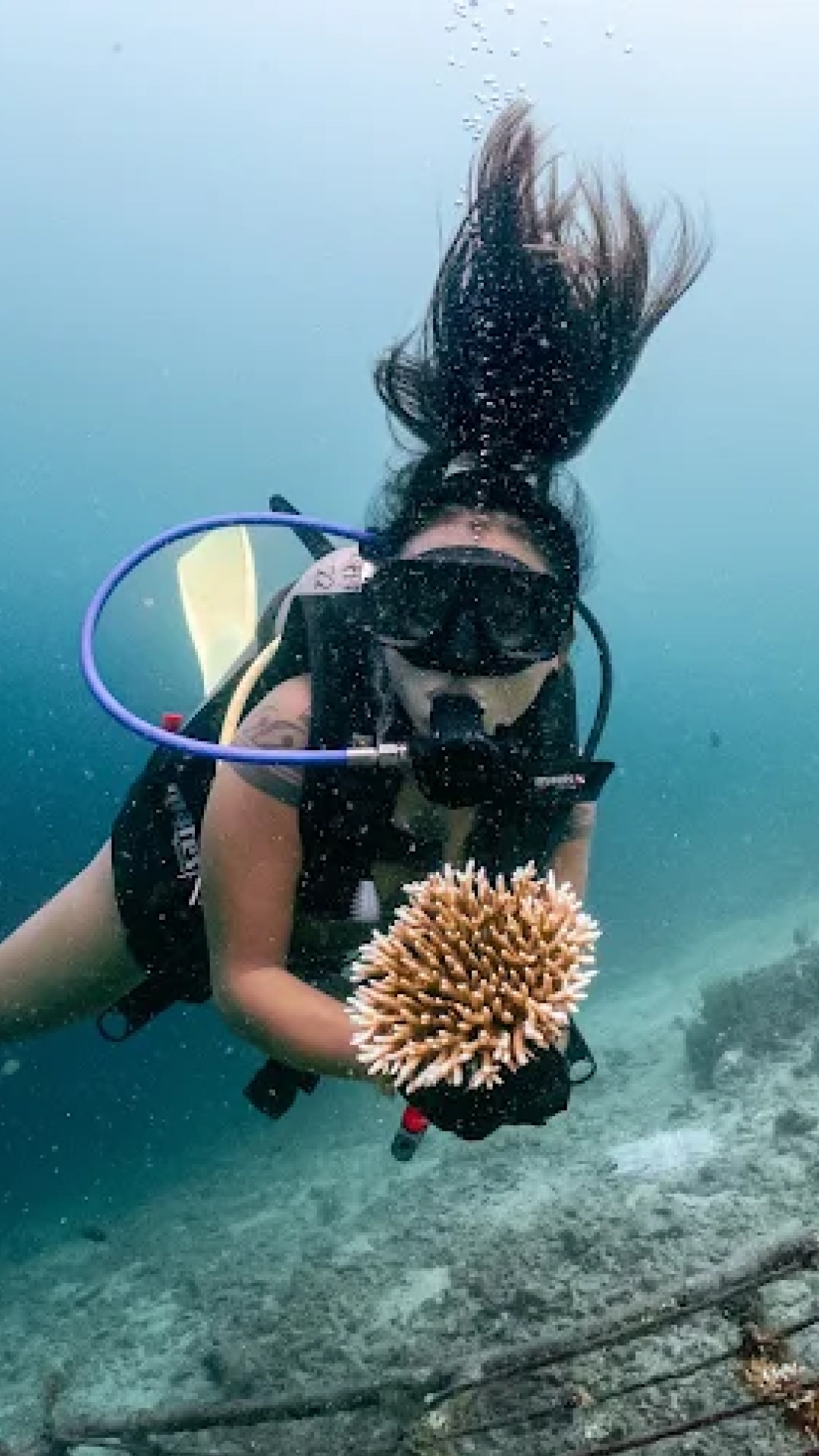
Malaysia's coral reefs — particularly in the Coral Triangle region — represent some of the highest marine biodiversity on the planet. The Go Coral Workshop is one of Southeast Asia's most respected coral propagation programs, combining scientific rigor with meaningful traveler participation.
You'll learn coral propagation techniques from certified marine biologists, work in established coral nurseries, and contribute to population surveys of both coral and associated marine species.
- What you'll do: Coral propagation, nursery maintenance, population surveys, biodiversity monitoring
- Impact: Contributes to reef recovery in one of the world's most biodiverse marine environments
→ Book Go Coral Workshop in Malaysia
🇮🇩 Amed Coral Restoration Snorkel Tour — Bali, Indonesia
- Best for: Beginners and non-divers — all you need is to be able to swim
- Duration: 4 hours | From USD $80 per person
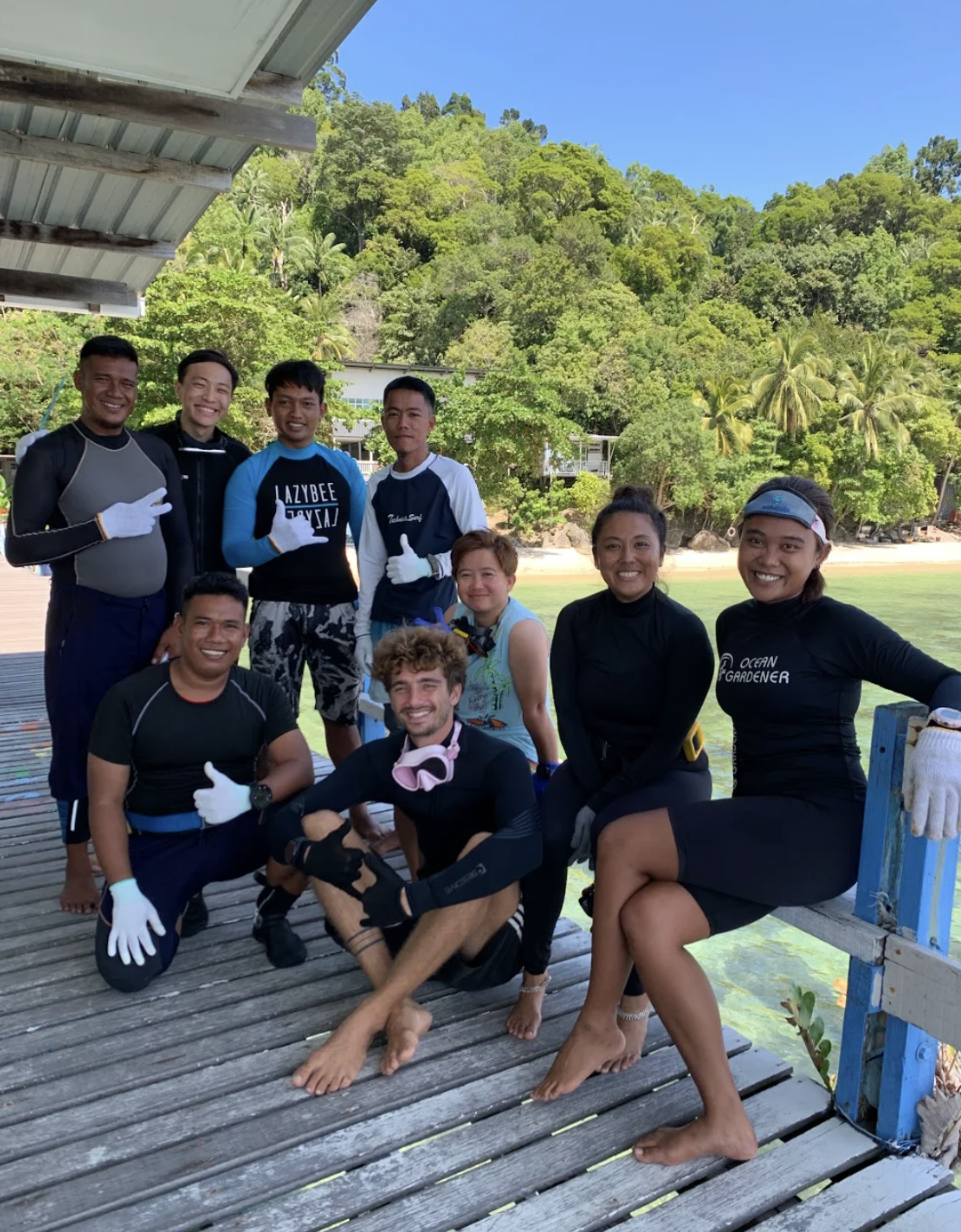
- Partner: Ocean Gardener — coral restoration NGO, est. 2016
- Location: Lipah Bay, Amed, East Bali
- Skill level: Able to swim and confident in the water — no dive cert required
Amed sits on Bali's tranquil eastern coast, where dramatic volcanic views of Mount Agung meet some of the island's most accessible and healthy coral reefs. It's also home to one of Indonesia's most respected coral restoration organisations: Ocean Gardener.
Founded in 2016, Ocean Gardener has outplanted over 10,000 corals in Lipah Bay alone — and collectively with their community partners, over 1 million corals across Indonesia. The nursery at Lipah Bay has two sections: a shallow water coral nursery at around 6 metres and a deeper section at 16 metres, filled with a wide variety of coral species. Because the project has been running for years, you can actually see the results — thriving reef sections that simply didn't exist before.
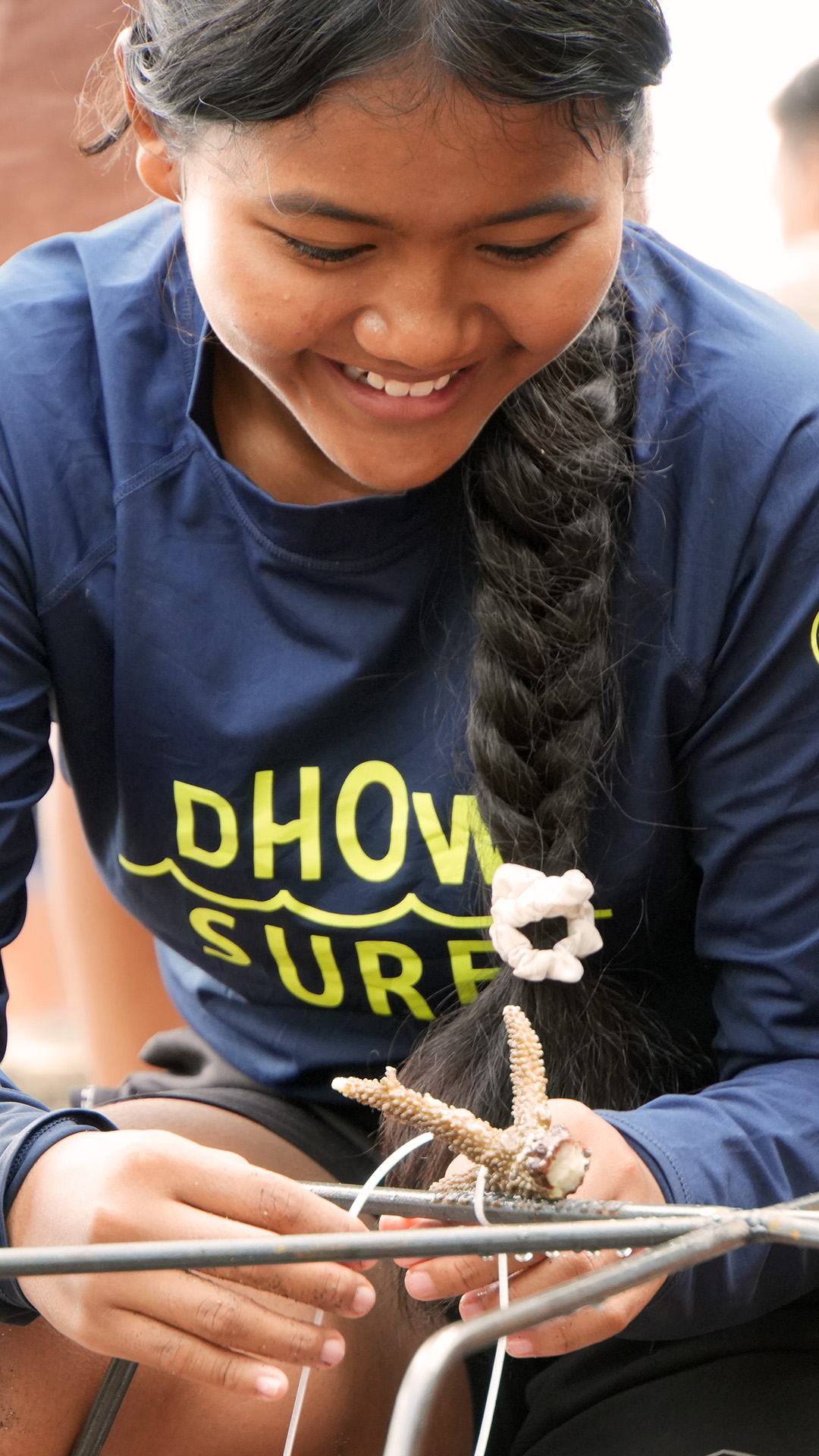
The experience starts with a presentation from the marine biologist — coral biology, the threats reefs face, and how restoration works. Then you snorkel the restoration site, identifying coral species and exploring the nursery. The centrepiece: you fragment a coral cutting from a donor colony and attach it to a substrate yourself, planting your own coral colony in the nursery. The Ocean Gardener team continues monitoring your colony after you leave — and when it's large enough, they outplant it to restore the surrounding reef.
- What you'll do: Reef education briefing, guided snorkel of the restoration site, hands-on coral fragmentation and planting with a marine biologist
- Includes: Snorkelling equipment (mask, fins, snorkel), marine biologist guide
- Impact: Your coral colony is monitored and outplanted to restore Lipah Bay's reefs; proceeds fund Ocean Gardener's Indonesia-wide restoration and community outreach
→ Book Amed Coral Restoration Snorkel Tour
How to Choose a Legitimate Ocean Restoration Program
As demand for conservation travel has grown, so has greenwashing — programs that use environmental language without delivering genuine conservation outcomes. Here's how to separate the real from the performative.
✅ Green Flags
- Named conservation partnerships — Real programs name their science partners. You should be able to look them up, find their research, and verify their work.
- Measurable impact metrics — How many coral fragments planted? What survival rate? How many hectares of mangrove restored? Legitimate programs track and publish this data.
- Participant involvement in real work — If you're mostly watching, it's ecotourism. If you're transplanting, surveying, recording data alongside scientists — that's restoration.
- Long-term project commitment — Programs operating for years with ongoing monitoring have the scientific credibility to back up their impact claims.
- Local community integration — The best programs hire and train local guides, researchers and rangers — ensuring conservation value stays in the community.
🚩 Red Flags
- Coral 'touching' framed as conservation with no science behind it
- Programs where you plant coral or trees with no follow-up monitoring
- No named scientific partners or affiliated research institutions
- Impact claims with no data to verify them
- Programs run entirely by tour operators with no conservation credentials
Canopi vets all partner organizations for scientific credibility before listing their experiences — and publishes real impact data so you know exactly what your trip contributes.
Do You Need to Dive to Do Ocean Restoration Travel?
No — and this is one of the most common misconceptions.
Many of the most impactful ocean restoration activities can be done by snorkelers, swimmers, or people working from boats and shorelines:
- Snorkeling coral restoration programs exist at many sites where nurseries are shallow (3–8 metres)
- Mangrove planting requires no water skills at all
- Beach and coastal cleanup programs are accessible to everyone
- Sea turtle monitoring is done on land, at night
If you scuba dive, you'll have access to deeper restoration work and longer bottom times — but don't let a lack of dive certification stop you from exploring what's available.
Ocean Restoration Travel vs Traditional Volunteer Programs
How do paid ocean restoration travel experiences differ from traditional volunteer programs (where you pay a fee to volunteer for weeks at a time)?
Traditional volunteer programs:
- Often require 2–4 week minimum commitments
- Can be logistically complex (visa requirements, accommodation, insurance)
- Quality varies enormously — some excellent, some exploitative
Ocean restoration travel (Canopi model):
- Designed for travelers with 2–10 days
- Vetted partner organizations with proven conservation track records
- Integrated with real travel experiences in world-class destinations
- Priced to fund conservation programs sustainably — not just keep organizations afloat
- All participants contribute to named, measurable projects
The short answer: ocean restoration travel is designed for travelers who want genuine impact without the complexity of long-term volunteering. The experiences are shorter, better designed, and tied to programs with verifiable outcomes.
How to Prepare for Your Ocean Restoration Trip
What to Bring
Most programs provide specialist conservation equipment. Pack:
- Reef-safe sunscreen — non-negotiable. Conventional sunscreen contains chemicals toxic to coral.
- Rash guard or wetsuit — protection from sun, jellyfish and cooler water.
- Underwater camera — a GoPro or similar will let you capture the experience.
- Reusable water bottle — hydration matters; single-use plastic doesn't belong on a restoration trip.
- Comfortable clothes for land sessions — evenings and briefings are usually on land.
Physical Preparation
You don't need to be an athlete. Being comfortable in the water makes the experience better for everyone. If you're planning a scuba-based program and haven't dived recently, a refresher dive beforehand is worthwhile.
Mindset
Come ready to learn. The marine biologists and local guides leading these programs have years of expertise — ask questions, engage with the science, and listen to the people who know these ecosystems best.
Frequently Asked Questions
How much does ocean restoration travel cost?
Experiences range from a single-day workshop (around $100–$300) to multi-day immersive programs ($500–$800+). A portion of every booking directly funds the conservation project. Think of it as a meaningful travel experience with a conservation premium baked in.
Can I do ocean restoration travel if I've never dived?
Yes. Many programs are accessible to snorkelers and non-divers. Some include dive certification as part of the experience. Check the requirements for your specific program before booking — and filter by skill level on Canopi.
Is ocean restoration travel suitable for families?
Many programs welcome families with children above a certain age (typically 12+). Sea turtle monitoring and mangrove planting experiences are particularly family-friendly. Check with the specific program for age requirements.
How do I know my contribution is making a real difference?
Canopi vets all partner organizations for scientific credibility and publishes impact data for every experience. You'll receive a report after your trip showing your specific contribution — coral fragments planted, data collected, or area restored.
When is the best time to go?
This varies by destination. Coral restoration programs in the Caribbean are typically best in the dry season (December–April). Southeast Asian programs vary by monsoon patterns. Canopi provides destination-specific guidance when you browse experiences.
Do ocean restoration experiences require physical fitness?
Most programs are accessible to people of average fitness. Snorkeling and shallow work requires comfort in the water. Scuba-based programs need standard dive fitness. Land-based programs (mangrove planting, turtle monitoring) are accessible to almost everyone.
Ready to Restore the Ocean?
The ocean doesn't need your admiration. It needs your hands.
Whether you're a first-time snorkeler or an experienced diver, there's an ocean restoration experience on Canopi that fits your skills, your schedule, and your budget — and every one of them creates verifiable, lasting impact in the marine ecosystems that the whole planet depends on.
Browse more Canopi ocean restoration experiences:
→ Browse all ocean restoration experiences
→ Coral Reef Restoration in Cozumel, Mexico
→ Go Coral Workshop in Malaysia