
What Happens When You Adopt a Coral Reef?
Most conservation donations disappear into a black box. You give, you get a thank-you email, and then — nothing. You have no idea what happened to your money, whether it worked, or whether the reef you were supposed to be saving still exists.
Coral adoption is different. When you adopt a coral reef fragment through Canopi, you’re not making a donation. You’re taking ownership of a specific, named, field-monitored piece of living reef — and you’ll get monthly updates from the team caring for it.
Here’s exactly what happens.
How coral adoption works
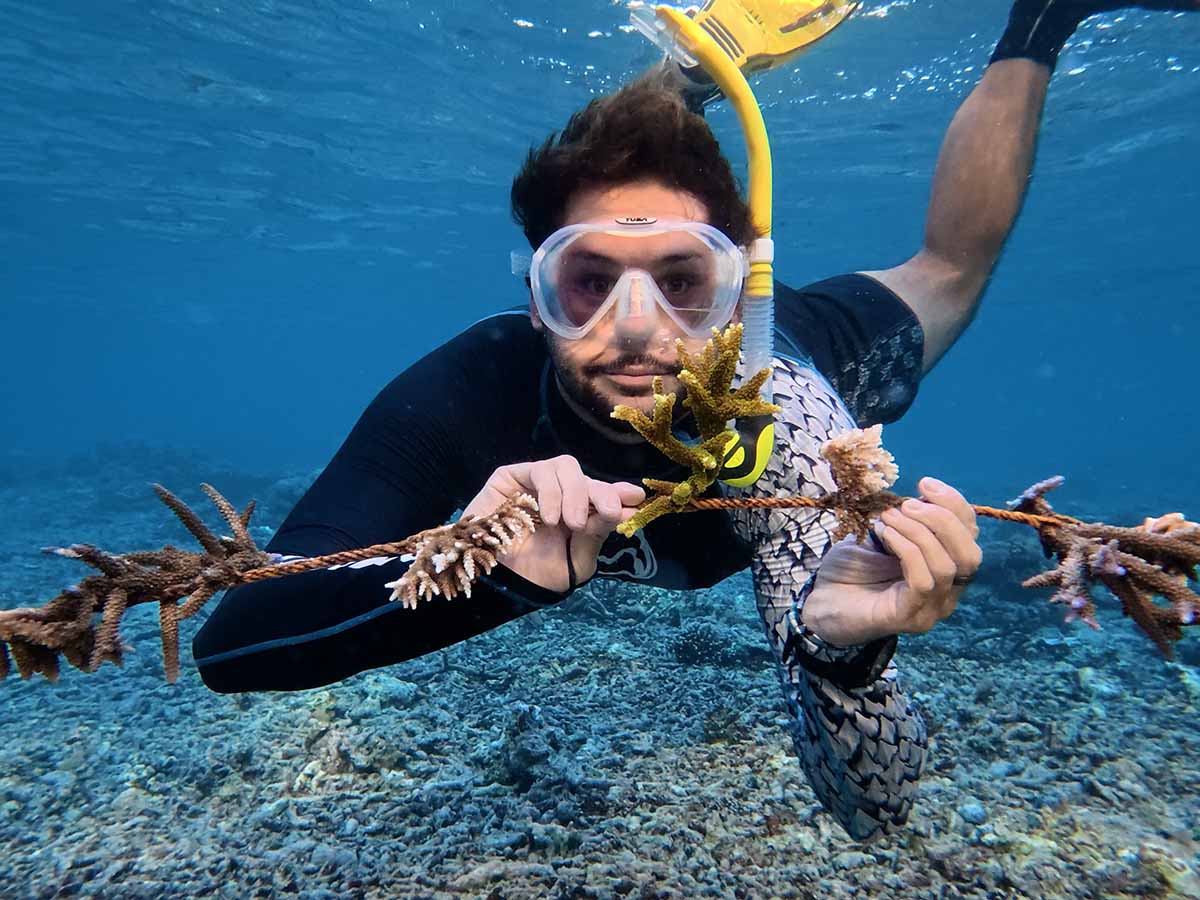
When you adopt a coral through Canopi, you’re sponsoring a real coral fragment — a small cutting of living coral that’s been placed on an underwater nursery frame and left to grow into a full colony over 12–24 months.
This process is called coral gardening. It’s one of the most effective active reef restoration methods we have, and it’s been practised by Ocean Gardener — Canopi’s partner NGO in Bali — for years.
Your fragment gets:
• A location in the ocean (Nusa Penida, Bali)
• A unique name, chosen by you
• A profile in your Canopi account
• Monthly field updates from the Ocean Gardener team
What your $5 does
Five dollars a month doesn’t sound like much. But at the scale of coral gardening, it goes far.
Your subscription covers:
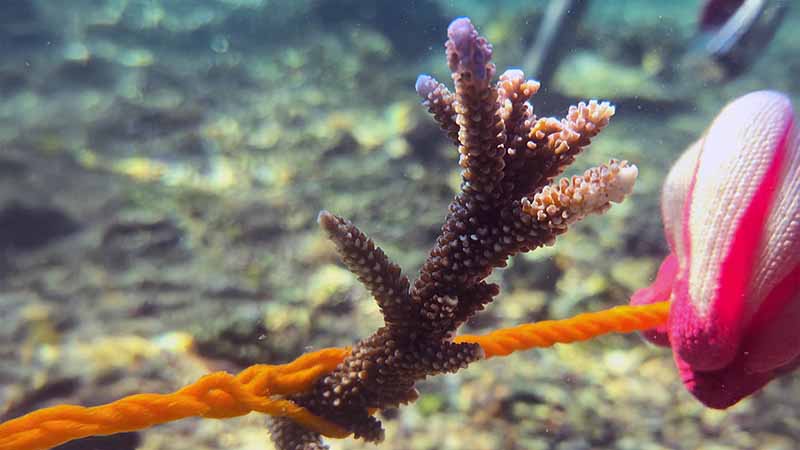
• Fragment propagation — sourcing and preparing the coral cutting
• Nursery maintenance — monthly cleaning of the frame, predator removal, growth monitoring
• Field documentation — photographs and notes on your specific fragment
• Your monthly update — written by the dive team, about your coral
Ocean Gardener knows which coral species grow fastest in Nusa Penida’s waters, which locations produce the strongest colonies, and how to turn the work of field scientists into updates that actually mean something to the person funding them. If you want to go deeper on why coral reefs matter, our full ocean restoration guide has the context.
Meet Ocean Gardener
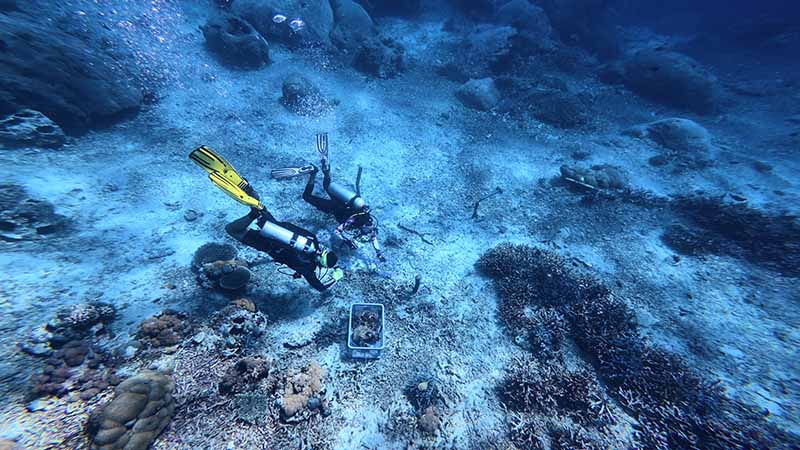
Ocean Gardener is a conservation NGO based in Nusa Penida, Bali. They work in one of the most biodiverse — and most threatened — marine ecosystems in Southeast Asia.
The waters around Nusa Penida support more than 300 species of fish, 10 species of dolphins and whales, and some of the most intact reef structures in the Indo-Pacific. They’re also warming. Fast.
Bleaching events — triggered by water temperatures just 1–2°C above normal — have hit the world’s reefs with increasing frequency since the 1990s. Ocean Gardener’s response is direct: propagate coral fragments in nurseries, transplant them to degraded reef areas, and document what happens. No middleman. No vague impact metrics. Just the actual reef, monitored by the same team every month. Read more in our Bali coral restoration guide.
When you adopt a coral through Canopi, Ocean Gardener is the team on the other end of your $5.
Monthly updates explained
Once a month, you’ll receive a field update from the Ocean Gardener team. This isn’t a generic newsletter — it’s specific to your coral and its nursery and surroundings. A photograph, growth notes, and any observations from the dive.
Coral fragments growing slowly, rates vary depending on the species and conditions, often adding several centimeters of growth each year. They are also very susceptible to getting eaten by certain snails or starfish, or smothered by algae and sponges since they are so small and defenseless. That is why the first 2 years of a coral fragment's life is critical that they are monitored and cleaned periodically.
That is what you're supporting on a recurring basis, the care of the baby coral while it's vulnerable so the odds of it growing up to form a reef increases exponentially.
Can you visit your coral?
Yes.
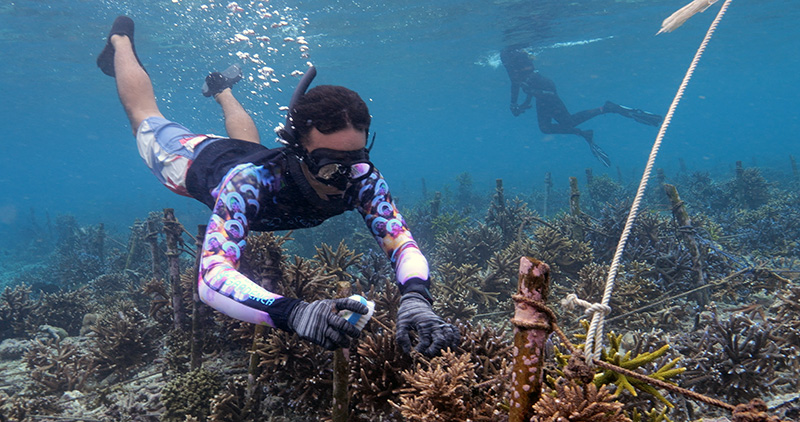
Canopi was built around the idea that conservation and travel can be the same thing. If you adopt a coral fragment through Canopi’s Adoptables program, you’ll be able to book a diving or snorkelling experience in Bali with Ocean Gardener in Nusa Penida — and visit your fragment in person.
This is what makes coral adoption genuinely different from a donation. You know where your reef is. You’ve been watching it grow for months. And you can go and see it.
Wondering how coral adoption compares to planting a tree? We break it down in Adopt a Coral vs. Plant a Tree: Which Has More Impact?.
Ready to adopt?
Canopi’s Adoptables program launches June 28. Waitlist members get early access. Adopt a coral fragment in Bali for $5/month. Name it. Track it. Visit it.