
Bali Coral Restoration: Complete Guide to Amed's Reefs & Ocean Gardener
Introduction
Most people who come to Bali to snorkel or dive see something beautiful. What they don't see — unless someone shows them — is how much has already been lost.
Bali sits at the heart of the Coral Triangle, a six-country region spanning Indonesia, Malaysia, the Philippines, Papua New Guinea, the Solomon Islands, and Timor-Leste. It contains roughly 76% of the world's known coral species and more than 3,000 species of reef fish. No marine ecosystem on the planet comes close to its biodiversity.
And it is under serious pressure.
Decades of reef-damaging tourism, coastal development, plastic pollution washing in from Java, crown-of-thorns starfish outbreaks, and a severe bleaching event in 2016 have degraded significant portions of Bali's reef systems. Some sites that were exceptional dive destinations twenty years ago are now shadows of what they were.
But not everywhere. And not without a fight.
On Bali's quieter eastern coast, in the fishing village of Amed, a team of marine biologists has spent nearly a decade building one of Southeast Asia's most successful coral restoration programs — working reef by reef, nursery by nursery, coral fragment by coral fragment.
This guide covers everything you need to know: what makes Bali's reefs extraordinary, what's threatening them, what Ocean Gardener is doing about it, and how to visit in a way that contributes to their recovery.
Bali and the Coral Triangle
To understand why Bali's reefs matter, you need to understand the Coral Triangle.
Covering 5.7 million square kilometres of tropical ocean, the Coral Triangle is the global centre of marine biodiversity — described by scientists as the "Amazon of the seas." It supports more species of coral, fish, and marine life than anywhere else on Earth, and it sustains the food security and livelihoods of roughly 120 million people across the six countries that share it.
Bali sits on the western edge of this region. Its reefs benefit from the nutrient-rich currents that sweep through the Indonesian archipelago, creating conditions where coral and marine life thrive at densities rarely found elsewhere. A healthy Balinese reef can support 700 or more coral species and over 1,000 fish species within a relatively small area.
That productivity also makes degradation here more significant. Losing reef in the Coral Triangle is not like losing reef elsewhere — the biodiversity consequences ripple far beyond the water you can see.
Amed: Bali's Eastern Reef
Amed is not the Bali most tourists see.
It sits on the island's northeastern coast, past Candidasa and the rice terraces of Sidemen, roughly two hours from the airport. There are no beach clubs. No crowds. The dominant sound is fishing boats leaving before dawn, and the backdrop is the volcanic silhouette of Mount Agung — Bali's highest peak and most sacred mountain — rising above everything.
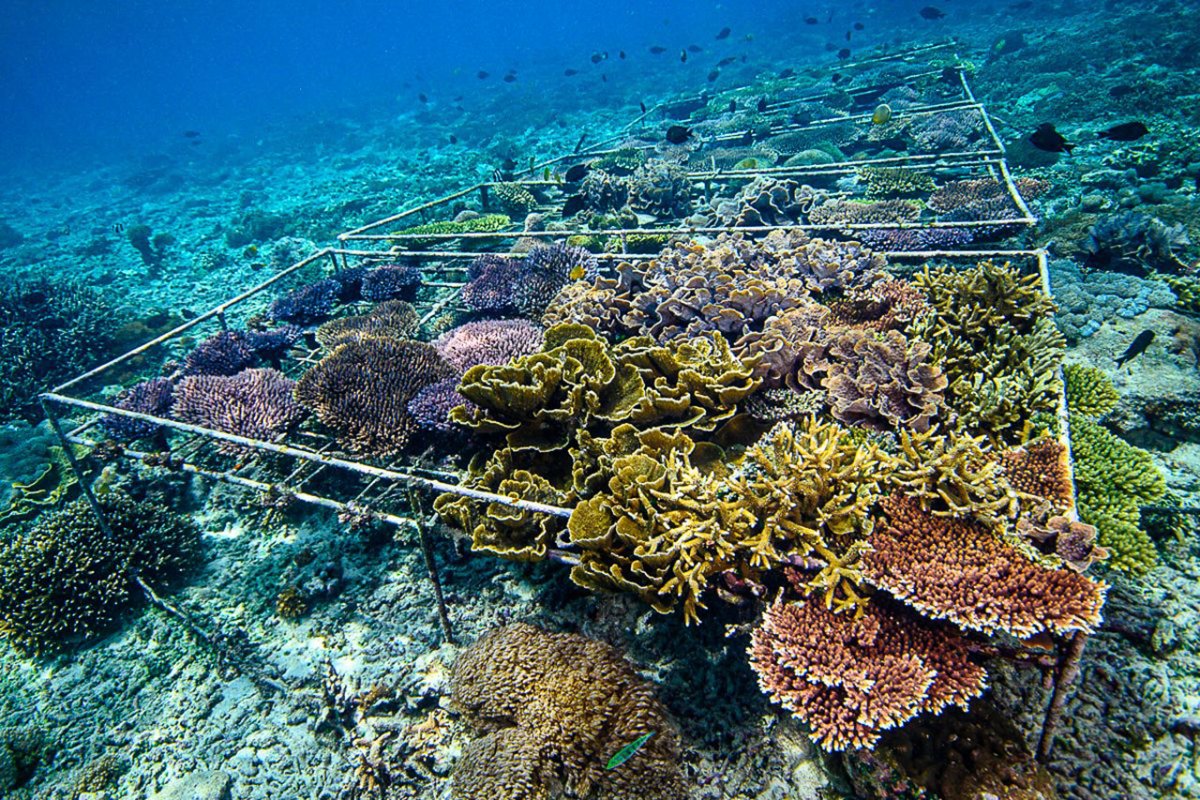
The reef here is shallow and accessible directly from the shore. Calm, clear water with visibility regularly reaching 20 metres or more. A celebrated Japanese shipwreck sitting on the sandy bottom in the bay, encrusted in coral and schooling fish. And in Lipah Bay — a small cove a few kilometres south of Amed village — one of the most active coral restoration sites in Indonesia. Ocean Gardener has a coral nursery and outplants the harvested corals from there onto the surrounding reef.
Nusa Penida: Bali's Marine Protected Area
Nusa Penida is the island’s best-kept secret that is no longer a secret. Once a quiet outpost for seaweed farmers, it has exploded onto the map as a "hidden gem" found by the world, largely thanks to the viral, dinosaur-shaped cliffs of Kelingking Beach. It is a place of dramatic contrasts, where Instagram-famous viewpoints meet some of the most protected waters in the Coral Triangle.
It sits across the Badung Strait, a rugged limestone island rising from the deep, roughly forty-five minutes by speed boat from the mainland. There are no calm lagoons here. No urban sprawl. The dominant sound is the rhythmic surge of the Indian Ocean against towering white cliffs, and the backdrop is the vast, sapphire horizon of the Ceningan and Lembongan channels — home to some of the most powerful currents in Indonesia.
The underwater world here is just as iconic as the cliffs above. While thousands flock to the ridgelines, the real magic happens in the deep, nutrient-rich upwellings that draw in Manta rays and the prehistoric-looking Mola mola. These cold currents create a high-energy environment where coral reefs must be incredibly resilient to thrive. Protecting these vibrant, current-swept gardens is essential as the island's popularity grows.
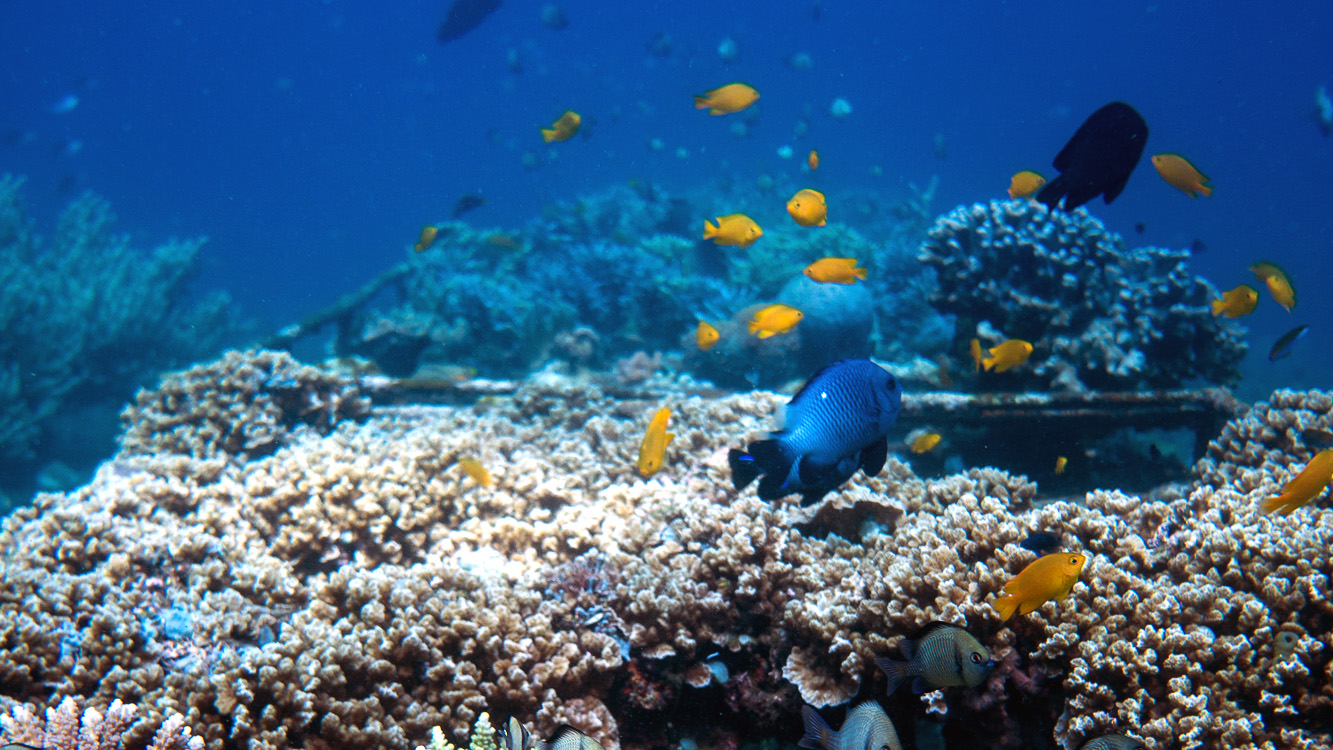
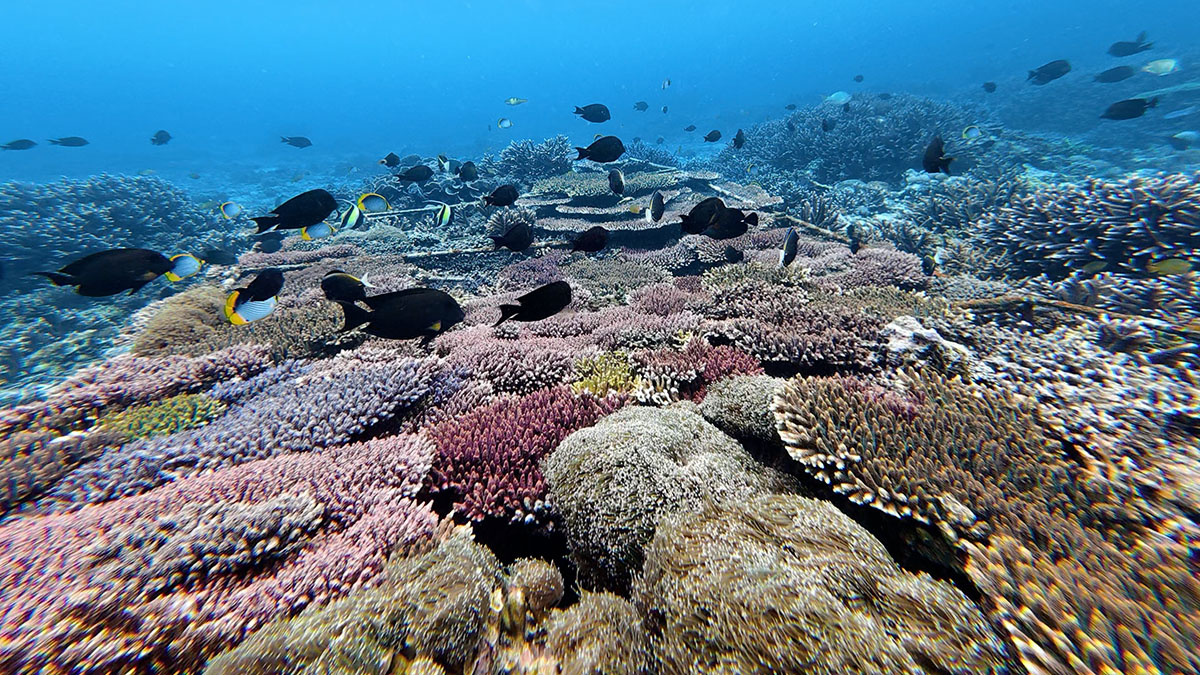
Ocean Gardener also has a coral nursery in Ped, Nusa Penida. They have also outplanted kilometeres of colorful Acropora coral here which has brought back a lot of the marine life.
The Reef Ecosystem: What Lives Here
Amed's reef is a working ecosystem in the process of recovery — which makes it both ecologically significant and genuinely instructive to visit.
- Coral: The restoration nurseries in Lipah Bay contain a wide variety of coral species across two depth zones — a shallow water nursery at around 6 metres and a deeper nursery at approximately 16 metres. Both are actively managed by Ocean Gardener's team. Visiting snorkellers can see coral at multiple stages of its restoration lifecycle: fragments in nursery structures, recently transplanted colonies, and older plantings showing years of recovery.
- Fish: Nurse sharks, reef fish in dense schools, parrotfish — and if conditions are right, the resident clownfish that make their home in anemones around the nursery site. The presence of juvenile fish on actively restored reef sections is one of the clearest ecological signals that planted coral is creating functional habitat, not just aesthetic coverage.
- Visibility and conditions: Amed's waters are generally calmer in the morning, which is why Ocean Gardener's snorkel tours begin at 9am. Visibility is consistently good, and the shallow depth of the primary nursery sites makes the experience genuinely accessible for people who are not strong swimmers or experienced divers.
The Threats Facing Bali's Reefs
- Tourism pressure and reef contact: Bali receives millions of visitors each year, and a significant proportion spend time on or in the water. Poorly trained snorkellers and divers who stand on coral, drag fins across formations, or touch marine life cause cumulative physical damage. Operators who don't actively manage reef contact contribute to degradation even when individual incidents seem minor.
- Plastic pollution: Indonesia is one of the world's largest contributors of plastic to the ocean. Currents carry debris from heavily populated areas of Java and Bali into coastal reef systems, where it smothers coral, entangles marine life, and leaches chemicals into the water.
- Crown-of-thorns starfish outbreaks: Acanthaster planci — the crown-of-thorns starfish — is a natural predator of coral polyps that periodically reaches outbreak densities, consuming large areas of living reef. Several reef systems across Indonesia have experienced significant damage from COTS outbreaks in recent decades.
- Climate change and bleaching: When ocean temperatures rise above the threshold coral can tolerate, the symbiotic algae that give coral its colour and energy are expelled — a process called bleaching. If temperatures stay elevated long enough, bleached coral dies. The 2016 mass bleaching event was the most severe on record globally, and Indonesian reefs were significantly affected.
- The scale of what's been lost: Surveys across Indonesian reef systems estimate that coral cover in many areas has declined by 30–50% over the past three decades. Some formerly celebrated dive sites have lost the majority of their living coral.
For a broader look at how ocean restoration travel is responding to reef decline across the Indo-Pacific, read our Ocean Restoration Travel: Complete Guide.
Ocean Gardener: Bali's Coral Restoration Program
Ocean Gardener was founded in 2016 by Vincent, a marine biologist and coral farmer with over 25 years of experience restoring reef ecosystems. Based in Bali, the organization was built on a specific conviction: that the most effective reef restoration happens when local communities, hotels, dive operators, and visitors are all actively involved — not just passive observers of someone else's conservation effort.
Since 2016, Ocean Gardener and its partners have:
- Planted over 1 million coral fragments across multiple sites in Bali
- Outplanted over 10,000 corals in Lipah Bay alone
- Established coral nurseries at three locations in Bali, including Amed and Nusa Penida
- Developed short and long-format restoration courses for international visitors and local participants
- Built partnerships with local communities, hotels, resorts, and dive operators to deploy and manage nursery infrastructure at scale
The nursery model Ocean Gardener uses — fragmenting healthy donor coral, cultivating fragments on underwater structures until they reach transplanting size, then outplanting them onto degraded reef — is one of the most rigorously tested restoration methods in use globally.
Proceeds from Ocean Gardener's visitor programs go directly back into their coral planting work and into reef research — specifically into coral reproduction science, which holds some of the most promising possibilities for accelerating restoration at scale.
How to Visit Bali's Reefs Responsibly
- Choose operators who enforce the rules. Reef-safe sunscreen only (no oxybenzone or octinoxate). No touching coral or marine life. Guides who actively manage group behaviour in the water. Ask before you book.
- Go beyond observation. Snorkelling over a reef is not the same as helping to restore one. The most meaningful reef visits generate something — planted coral, data, direct funding for research. This is the difference between reef tourism and reef restoration travel.
- Stay in Amed rather than day-tripping. Amed has small guesthouses and locally-owned restaurants that benefit directly from visitor spend. Staying overnight means your money stays in the community.
- Get directly involved. Through Canopi's partnership with Ocean Gardener, you can do more than observe the reef — you can actively help restore it.
Three Ways to Restore Bali's Reefs Through Canopi
🇮🇩 Amed Coral Restoration Snorkel Tour
Partner: Ocean Gardener | Duration: 4 hours | Price: USD $80 | Meeting point: Pohoda Bar & Restaurant, Lipah Bay, Amed | Starts 9am
The foundational Ocean Gardener experience and the most accessible to first-time conservation travellers.
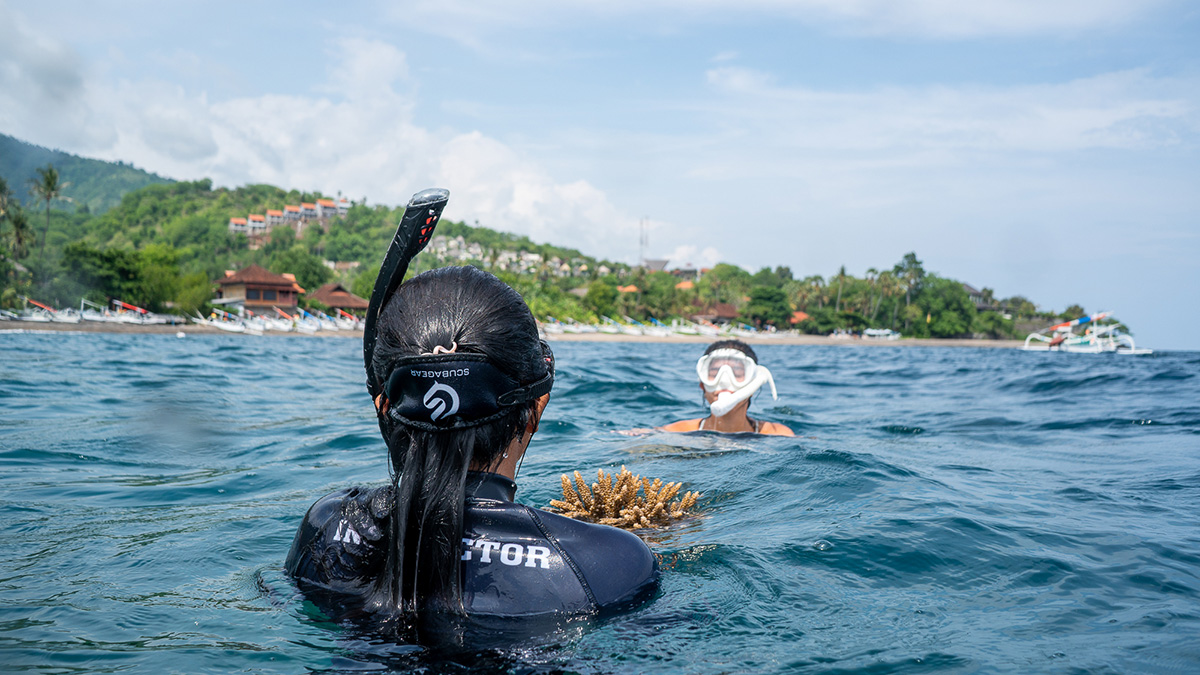
You'll start with a briefing from the marine biology team — what coral is, why it matters, and what's threatening it in Bali. Then you collect your snorkel gear and head out to Lipah Bay's nursery site, where the team walks you through what you're seeing: coral at different stages of growth, the species composition of the nursery, and the evidence of recovery on sections of reef that have already been outplanted.
The centrepiece of the visit: you'll work directly with a marine biologist to fragment a coral cutting from a donor colony, attach it to a substrate, and plant your own coral in the nursery. The team will continue monitoring your colony — and when it reaches transplanting size, it will be outplanted to help restore the surrounding reef. Your coral keeps growing long after you've gone home.
No scuba certification required. You need to be able to swim and comfortable in the water. Snorkel equipment included.


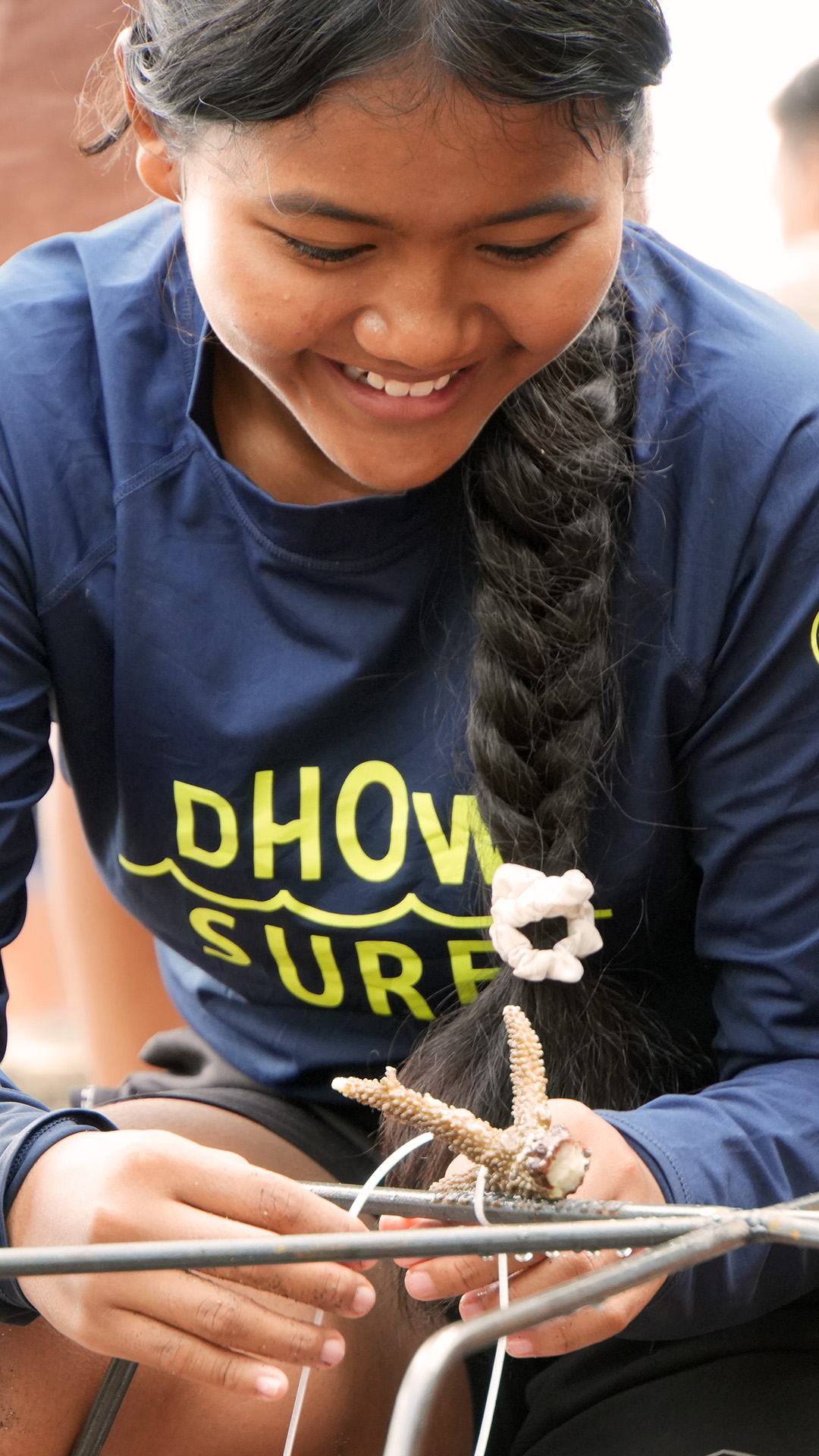
🇮🇩 Nusa Penida Coral Restoration Snorkel Tour
Partner: Ocean Gardener | Duration: 4 hours | Price: USD $80 | 45 minutes by fast boat from Sanur, South Bali
Nusa Penida is an island off Bali's south coast — one of the most spectacular marine environments in Indonesia, known for manta ray encounters, dramatic underwater topography, and reef systems with exceptional biodiversity.
Ocean Gardener runs the same coral restoration snorkel tour format here — briefing, nursery visit, hands-on coral planting — in a different reef environment. If you're staying in the Kuta, Seminyak, or Sanur area rather than Amed, Nusa Penida is your closest Ocean Gardener experience.
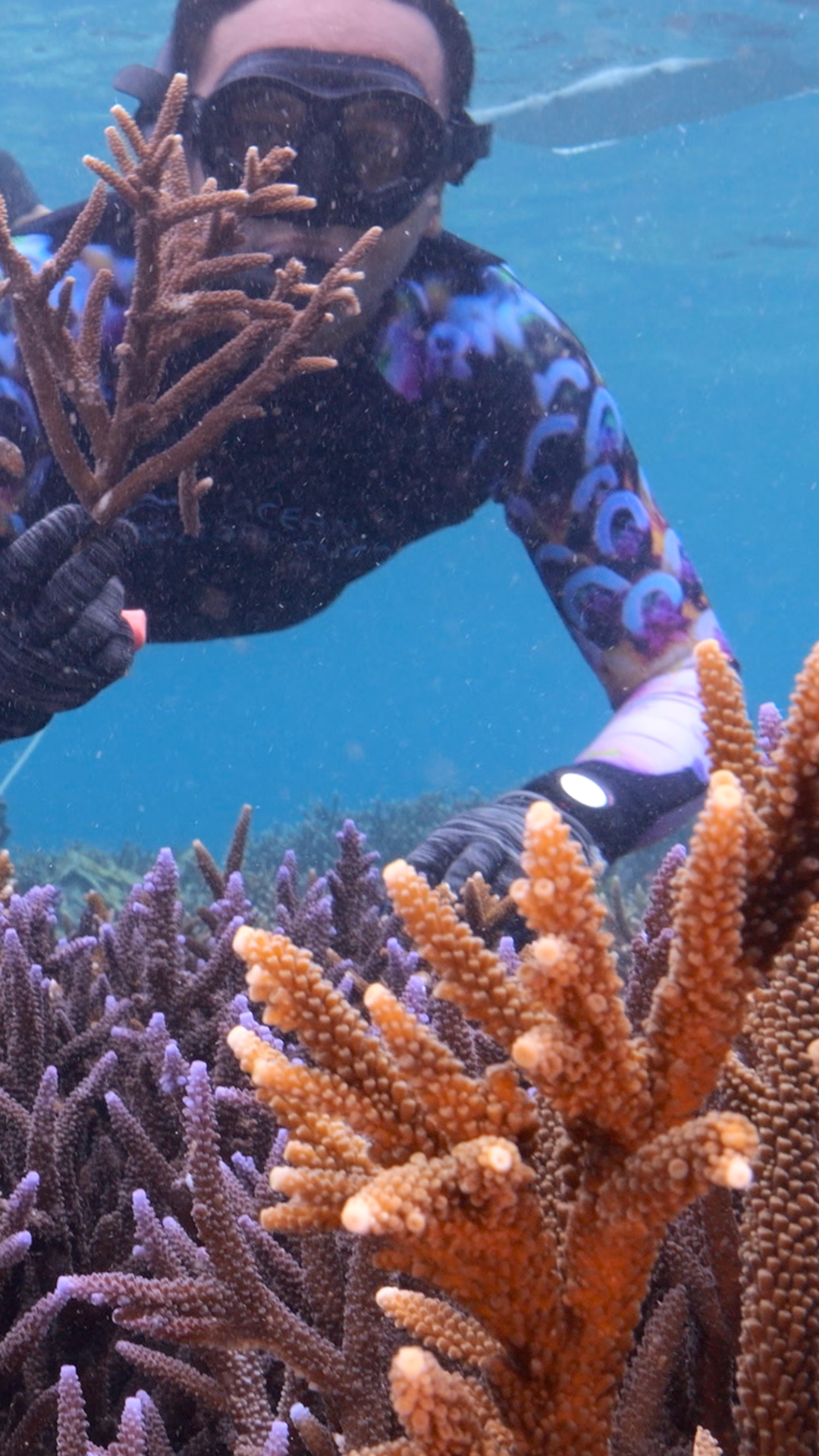
🇮🇩 Intro to Coral Restoration — Amed (3 Days)
Partner: Ocean Gardener | Duration: 3 days | Price: USD $320 | Based in Amed, East Bali
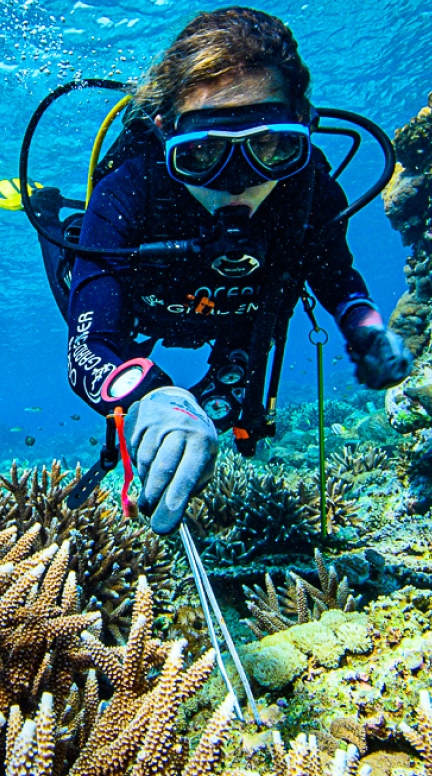
For travellers who want to go beyond a half-day visit and develop a real working understanding of coral restoration practice, Ocean Gardener offers a 3-day introductory program based in Amed. Over three days, you'll work alongside the Ocean Gardener team on active restoration operations — not as a visitor, but as a participant in the day-to-day work of reef recovery.
This is for people who are serious about ocean conservation and want to leave Bali with skills, knowledge, and a direct contribution to one of the most impactful restoration programs in Southeast Asia.
Frequently Asked Questions
Do I need to be a diver to join a coral restoration experience in Bali?
No. The Amed and Nusa Penida snorkel tours are designed for snorkellers — you need to be comfortable in the water, but no scuba certification is required. The 3-day Intro program may involve diving; check with Ocean Gardener directly.
Is Amed suitable for beginner snorkellers?
Yes. The water in Lipah Bay is generally calm, the reef is shallow, and visibility is good. Ocean Gardener specifically notes that the site is well-suited to beginners. The 9am start time takes advantage of the calmest morning conditions.
What sunscreen can I use?
Reef-safe only — no oxybenzone or octinoxate. These chemical UV filters are toxic to coral polyps even at very low concentrations. Mineral sunscreens (zinc oxide, titanium dioxide) are the safe alternative. A long-sleeve rashguard is the most effective sun protection and avoids the issue entirely.
Where does the money from my booking go?
Proceeds from Ocean Gardener visitor programs fund their active coral restoration work across Indonesia — planting operations, nursery maintenance, staff, and coral reproduction research. When you book through Canopi, your participation directly supports this work.
How many corals has Ocean Gardener planted?
Ocean Gardener and its partners have collectively planted over 1 million coral fragments across their Bali sites. In Lipah Bay alone — the Amed nursery site — over 10,000 corals have been outplanted directly onto the reef.
Can I visit multiple Ocean Gardener sites in one trip?
Yes. Combining the Amed snorkel tour and the Nusa Penida tour gives you two different reef environments and restoration contexts. The sites are on opposite sides of the island, so plan your accommodation accordingly.
What is regenerative travel and how does it apply to reef snorkelling in Bali?
Regenerative travel means your visit actively improves the place you're visiting — not just minimises harm. Planting coral that will continue growing after you leave, funding research that improves restoration science globally, and creating economic incentive for local communities to protect reef ecosystems: that's what regenerative travel looks like on a reef. For a step-by-step guide to finding and booking these kinds of experiences, see our How to Book Sustainable Travel Experiences.
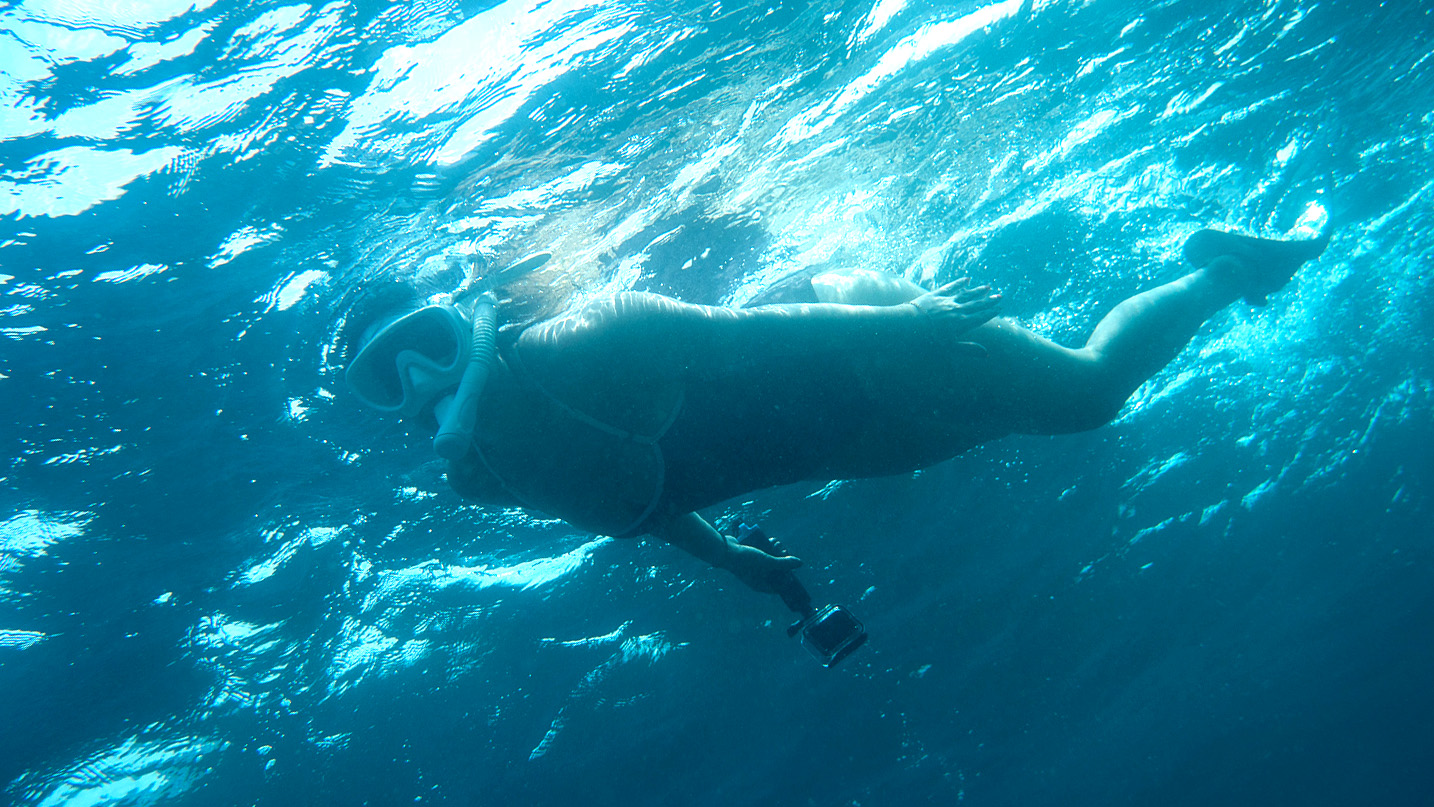
Ready to Restore Bali's Reefs?
Ocean Gardener has spent nearly a decade proving that coral restoration works — that reefs can recover, that science and community effort can reverse damage that once seemed permanent.
You can be part of that. Four hours in Lipah Bay. $80. One coral planted, monitored, and eventually outplanted to a reef that needs it.
Book the Amed Coral Restoration Snorkel Tour → canopi.travel/experience/indonesia/og-amed-coral-restoration-snorkel-tour
Browse all Ocean Gardener experiences → canopi.travel/experiences/indonesia