Bridging the Green Divide: Wildlife Corridors and Forest Fragmentation
In my previous post, we explored the forest as a "vertical city" and a "biotic pump" that breathes rain back into our atmosphere. We established that these ecosystems are the functional life-support systems for the Yucatan. But for a forest to function, you need the pollinators and seed dispersers to traverse it and do their job.
Threads and Tunnels: The Mystery of the Highway
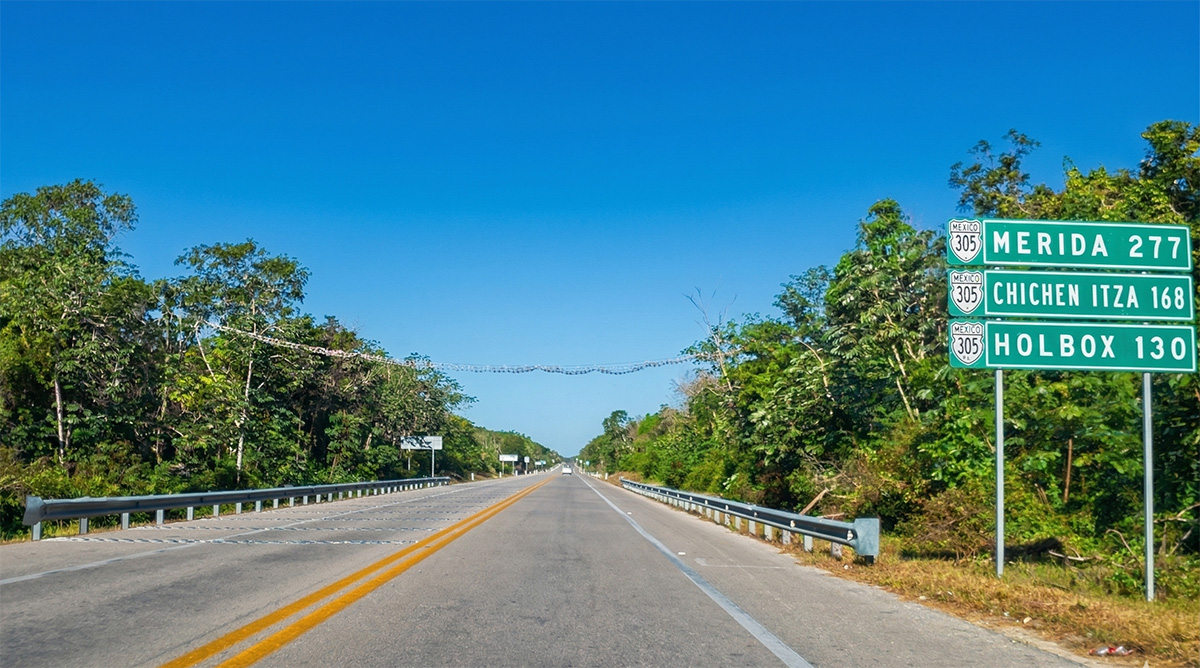
Lately, as I've been driving across the Yucatan on vetting trips to visit our local NGO partners and Mayan communities, I've started noticing two things: thin rope bridges stretching across the highways and, sometimes, what seem like underpasses where chain-link fences funnel animals into them.
The rope bridges are the most apparent — you cannot miss them driving to Merida or Holbox. It got me thinking: what are these structures, and do they actually work? Or are they just a "feel-good" band-aid for the massive highways we've carved through the jungle?
I did some digging, and the research is surprisingly encouraging. These Arboreal Bridges are literal lifelines. A landmark study published in Scientific Reports by Smithsonian Conservation Biology Institute researchers found that when properly placed, natural canopy bridges are highly effective at restoring connectivity for arboreal mammals — over the course of a year, animals used the canopy bridges at a rate nearly 200 times higher than they crossed on the ground.
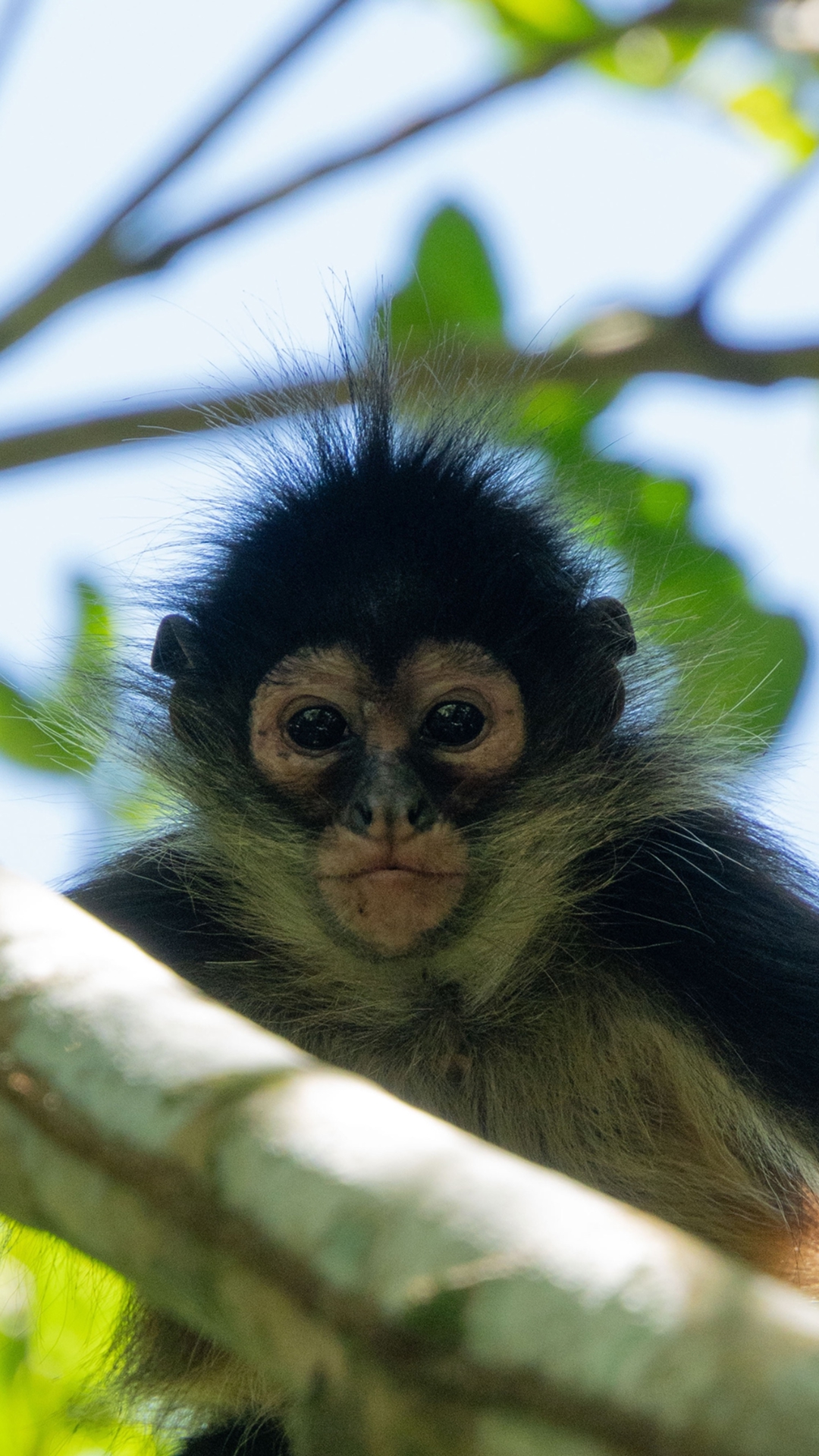
Then I wondered about our spider monkeys of Punta Laguna. Their forest is now bifurcated by a small highway. Could Canopi install a rope bridge there? Was there any research on how spider monkeys specifically use these structures?
It turns out the picture is more complicated. A study published in Folia Primatologica reviewed five cases where artificial bridges were monitored specifically for spider monkeys — and found no confirmed crossings in any of them. Spider monkeys appear to be unusually cautious and may require uninterrupted canopy cover beneath and around a bridge to feel safe enough to use it. The science suggests that for our Punta Laguna troop, the solution may need to go further than a simple rope line — strategic reforestation to close the canopy gap along the road may be a necessary first step.
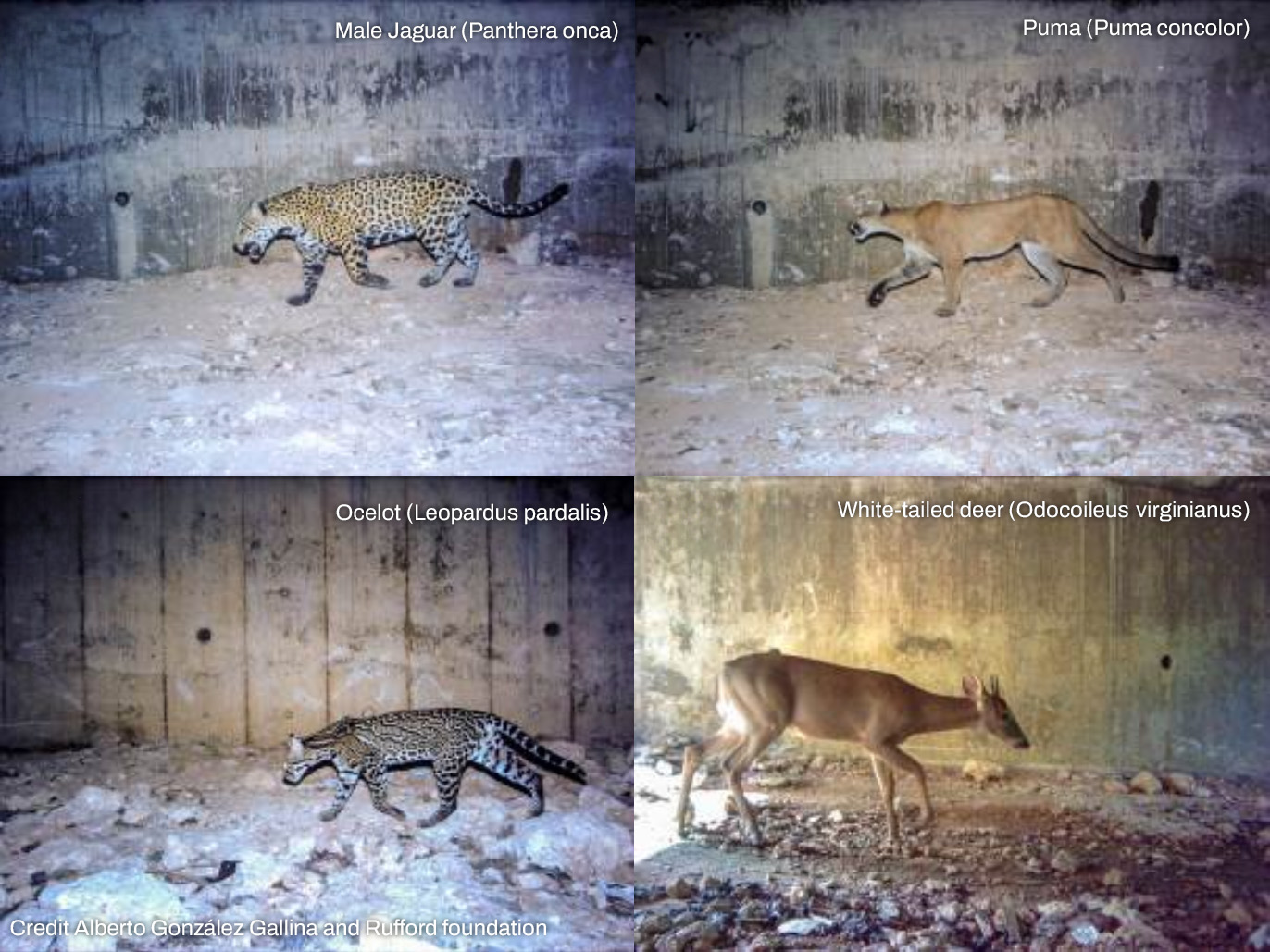
The underpasses along the same highway corridor tell a more hopeful story. A study published in PLOS ONE monitored the Nuevo Xcán–Playa del Carmen highway in Quintana Roo — which bisects the forest corridor between two Jaguar Conservation Units — and documented 24 jaguar crossings using dedicated wildlife underpasses, along with ocelots and 18 other mammal species. The fences aren't there to keep animals out; they are "funnels" that guide them away from the asphalt and toward a safe passage. You can read more about the project and see camera trap photographs on the Rufford Foundation project page, which funded this research.
Lessons from the "Green City" Singapore
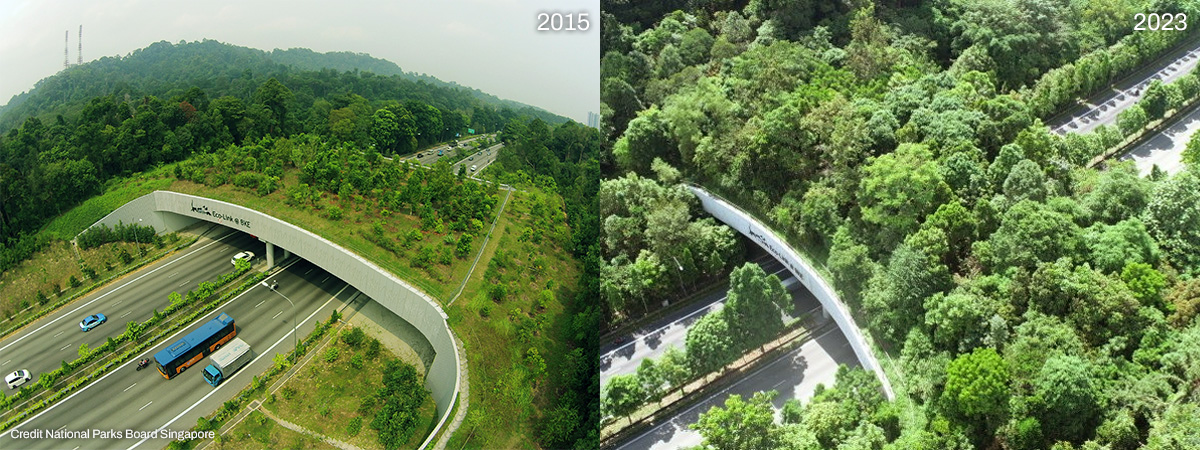
While our bridges and tunnels are a start, other places are taking this to the next level. Look at Singapore. Despite being one of the most urbanized islands on Earth, they built the Eco-Link@BKE — a massive hourglass-shaped overpass covered in native forest vegetation, reconnecting the Bukit Timah and Central Catchment nature reserves that had been severed by a highway since 1986.
The results have been remarkable. As of 2021, over 100 fauna species have been documented using the bridge. Among the most significant sightings: critically endangered Sunda Pangolins — which were being killed at a rate of roughly two per year by road traffic before the bridge was built — and the Lesser Mousedeer, a species previously found only in one of the two reserves, whose appearance in the other confirmed it had made the crossing. Mothership's 10-year retrospective on the project, with NParks camera trap footage and GIFs of animals on the bridge, is one of the most vivid accounts of a wildlife corridor in action. By replicating the forest floor on a bridge, Singapore turned a concrete barrier back into a living corridor.
The Tragedy of the Forest "Island"
So, why does this connectivity matter so much? It comes down to Forest Fragmentation — and it starts before an animal even reaches the road.
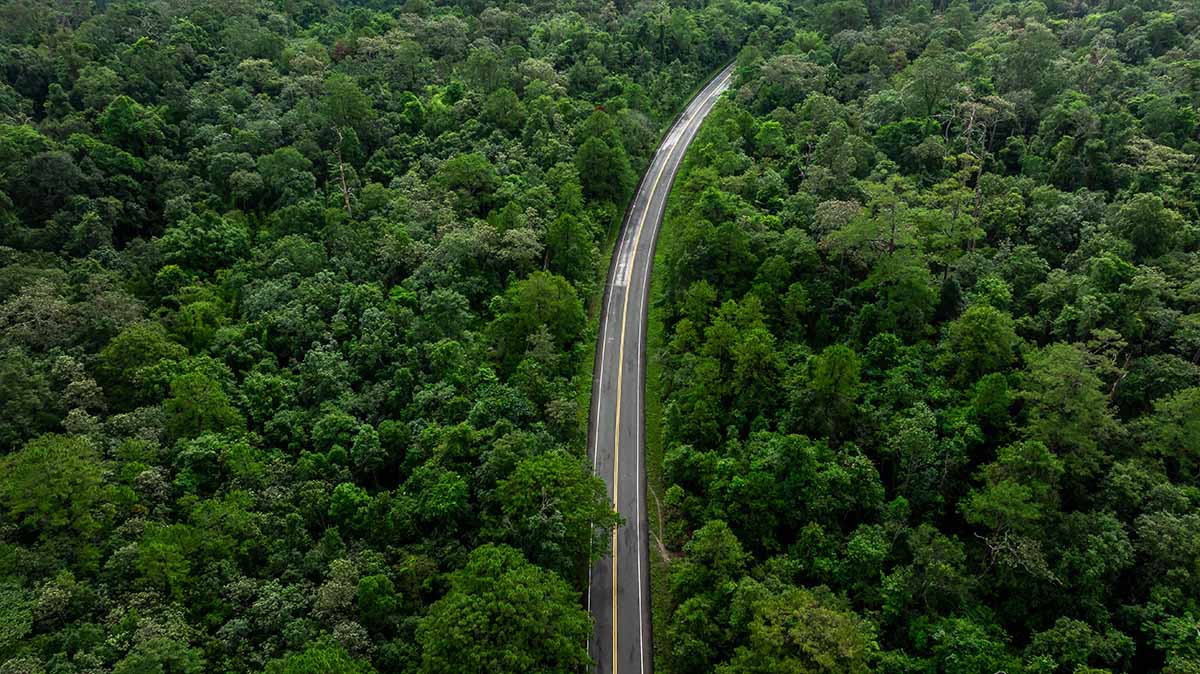
When we build a major highway, we aren't just losing the trees under the asphalt; we are creating "islands." But here is the thing I've noticed: it's not just the big highways. Even the smaller, secondary roads I take to reach remote villages effectively bisect the forest. To a jaguar or a group of monkeys, a paved road — no matter the size — can feel like an impassable ocean.
Part of this is instinct. Wildlife are naturally wary of humans, vehicles, and unfamiliar sounds. The continuous noise and movement of traffic doesn't just kill animals that try to cross — it actively repels them from the surrounding habitat. A meta-analysis of 49 studies across 234 mammal and bird species found that mammal populations begin to decline at distances of up to 5 km from roads and human infrastructure. Birds are affected within roughly 1 km. A separate "Phantom Road" experiment — where researchers broadcast traffic noise into a roadless forest using speakers — found that bird abundance dropped by more than a quarter, and some species avoided the area entirely, even with no physical barrier present. The sound alone was enough. This means that even a quiet secondary road can effectively push wildlife back from a much larger band of forest on either side, silently hollowing out habitat that looks intact on a map.
When populations are trapped on these islands, they are forced to mate with the same small group of relatives. Imagine if you were trapped in a tiny village of only 50 people for your entire life, and your children and grandchildren were too. Eventually, everyone is related. This leads to "inbreeding depression" — the gene pool shrinks, harmful traits get amplified, and the population loses its resilience against disease. Fragmentation is a slow-motion extinction.
Reforestation: It's All About Location
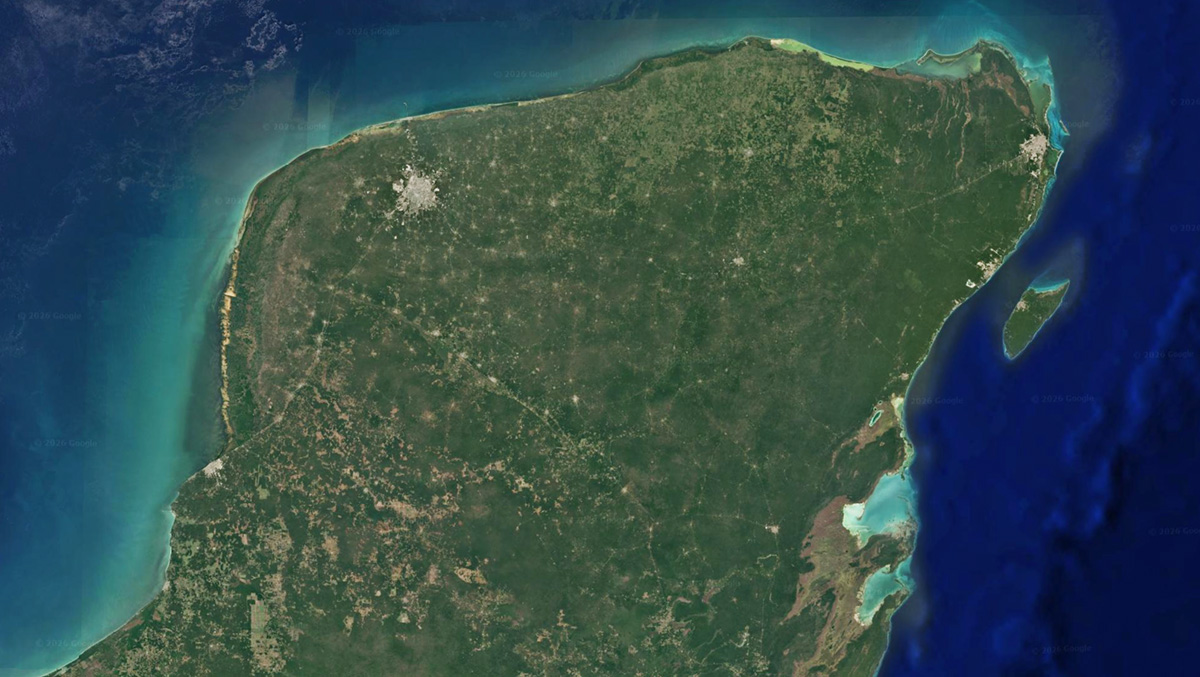
This has shifted how I think about the work we do at Canopi. Reforestation is good, but strategic reforestation is transformative.
Bringing back the shade and the water purification of trees is vital, but planting trees in locations that create Wildlife Corridors — and that restore the canopy continuity that shy species like spider monkeys depend on — has an outsized impact. It's the difference between adding a room to a house and building a bridge between two cities. When we reforest strategically, we allow the "blood" of the ecosystem — the genetics — to circulate again.
I'm learning a lot as we continue to visit Mayan communities and witness their respective conservation and reforestation work around the Yucatan. They have been the stewards of these corridors for millennia, and every trip reinforces the same truth: the forest is only as strong as its connections.