
Cozumel Marine Park: History, Rules & Conservation Guide (2026)
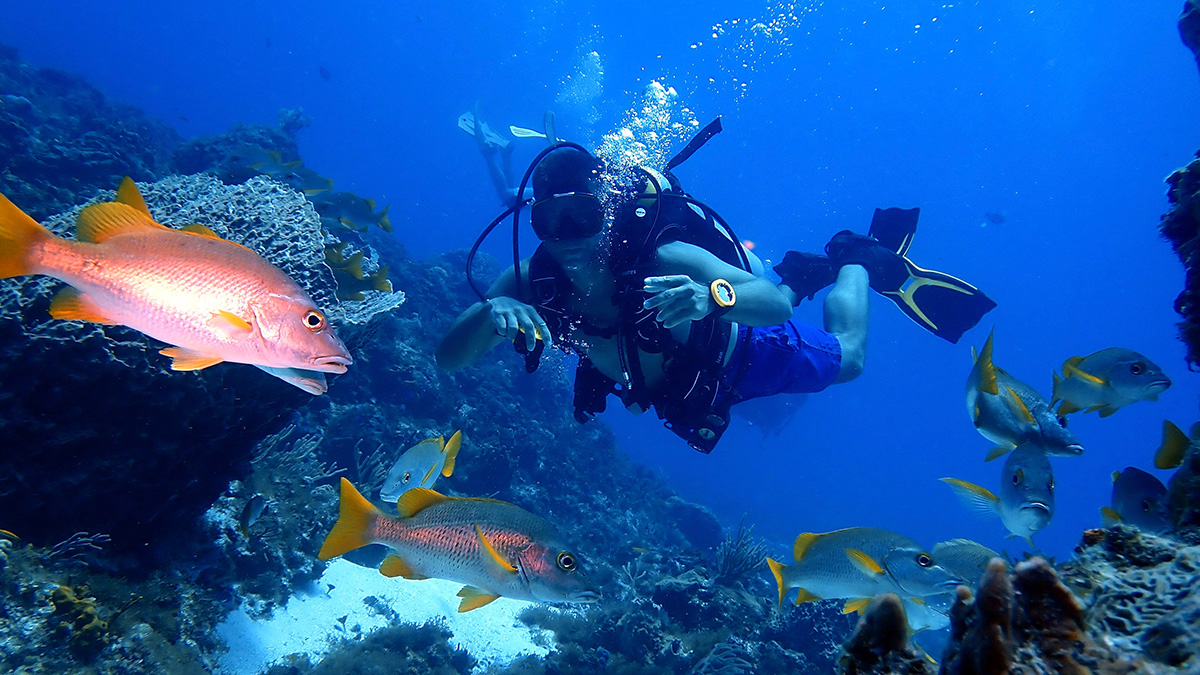
Cozumel is one of the most celebrated dive destinations on the planet. The water is warm, the visibility can stretch beyond 30 metres, and the coral formations along the western coastline are among the most biodiverse in the Caribbean. Beneath that reputation, though, is a more complicated story — one about a marine park that has been fighting for its own survival almost since the day it was created.
This guide covers everything you need to know before you visit: the park's history, what lives on the reef, the threats it faces, and how to travel in a way that contributes to its recovery rather than its decline.
What Is the Cozumel Marine Park?
The Cozumel Marine Park — officially the Parque Nacional Arrecifes de Cozumel — is a federally protected marine reserve off the southwestern coast of Cozumel Island in Mexico's Quintana Roo state. It sits within the Mesoamerican Reef, the second-largest coral barrier reef system in the world, stretching over 1,000 kilometres from the Yucatán Peninsula to Honduras. It includes the popular Palancar reef, Santa Rosa Wall, Columbia reef, Punta Sur (Devil's Throat) and beginner friendly Paradise and Villa Blanca reef.
The park spans nearly 12,000 hectares of coral reef ecosystem and is managed by Mexico's federal parks authority, CONANP. Its waters are home to some of the healthiest remaining coral colonies in the Caribbean — a distinction that grows more significant each year as reefs across the region continue to decline.
The Reef Ecosystem: What Lives Here
Cozumel's reef system is exceptional by any measure — and increasingly rare.
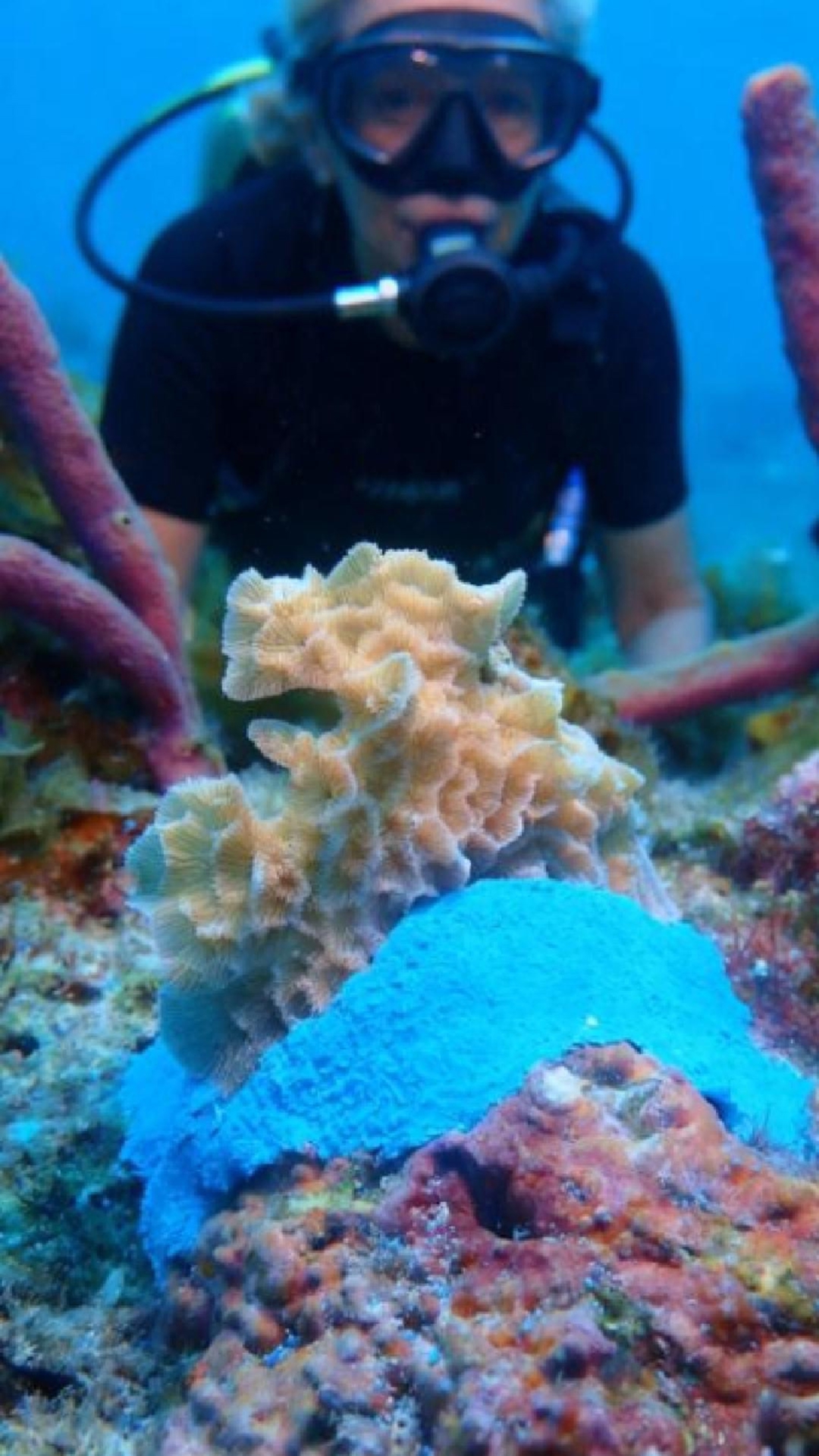
Coral: The park's most significant ecological distinction is the presence of living Staghorn coral (Acropora cervicornis) and Elkhorn coral (Acropora palmata) colonies. Both species are functionally extinct in Florida, where remaining populations are too dispersed to reproduce. In Cozumel, colonies are still growing, still reproducing, and — thanks to active restoration — still being planted on degraded reef sections.
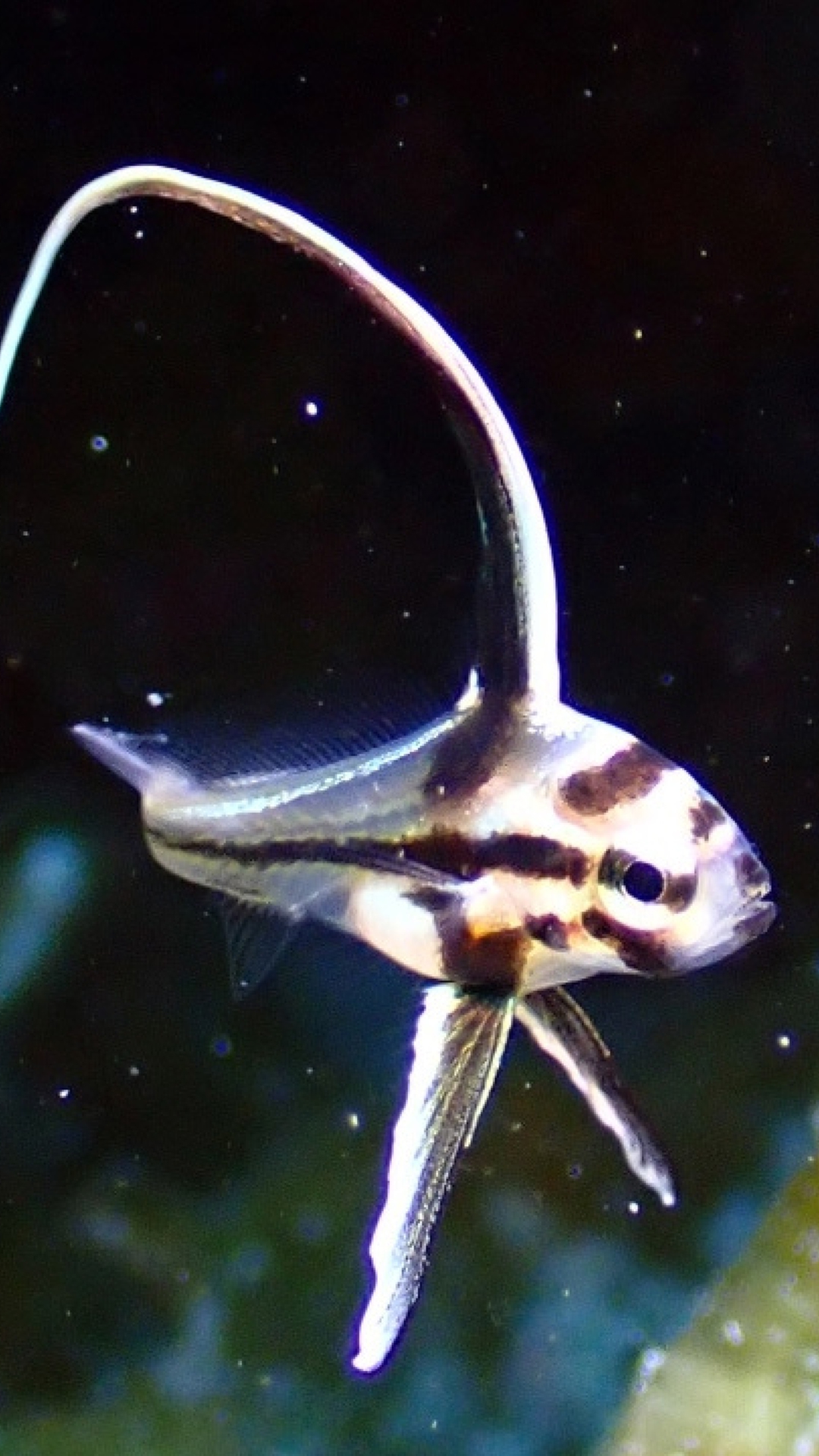
Fish: The reef supports over 500 species of fish. Nurse sharks rest on the sandy floor. Eagle rays cruise the deeper drop-offs. Queen angelfish, recently returning to sections of reef where they hadn't been seen in years, are a direct indicator of reef recovery. Baby fish of multiple species have been documented on actively restored sections — a sign that planted corals are creating functional habitat.
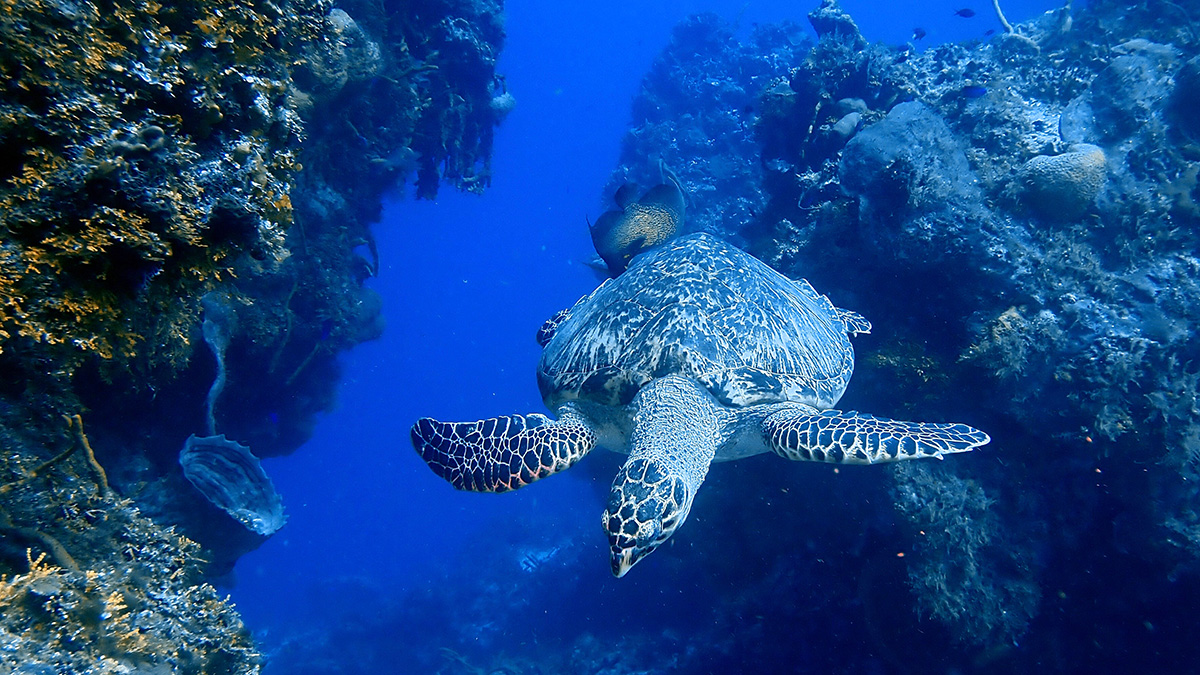
Other marine life: Hawksbill sea turtles, Caribbean spiny lobster, moray eels, and dense schools of sergeant majors and parrotfish are regular sightings. Parrotfish are especially important — they graze on algae that would otherwise smother recovering coral, making them a keystone species for reef health.
Visibility: Cozumel's geography creates consistent currents that sweep across the reef and keep the water remarkably clear. Visibility of 20–30 metres is common; on calm days it can exceed that significantly.
The Threats Facing the Reef
Cruise ship development: The 1994 terminal set a precedent, and the 2025 fourth pier proposal demonstrated that the threat never fully disappears. Beyond construction damage, large cruise ships exchanging ballast water between Florida and Cozumel ports are a suspected vector for coral diseases that have devastated Florida's reefs.
Anchor damage and diver pressure: The park receives hundreds of thousands of visitors annually. Poorly anchored boats and untrained divers and snorkelers cause cumulative physical damage to coral formations. Operators who don't enforce no-touch, no-anchor rules contribute to degradation even when individual incidents seem minor.
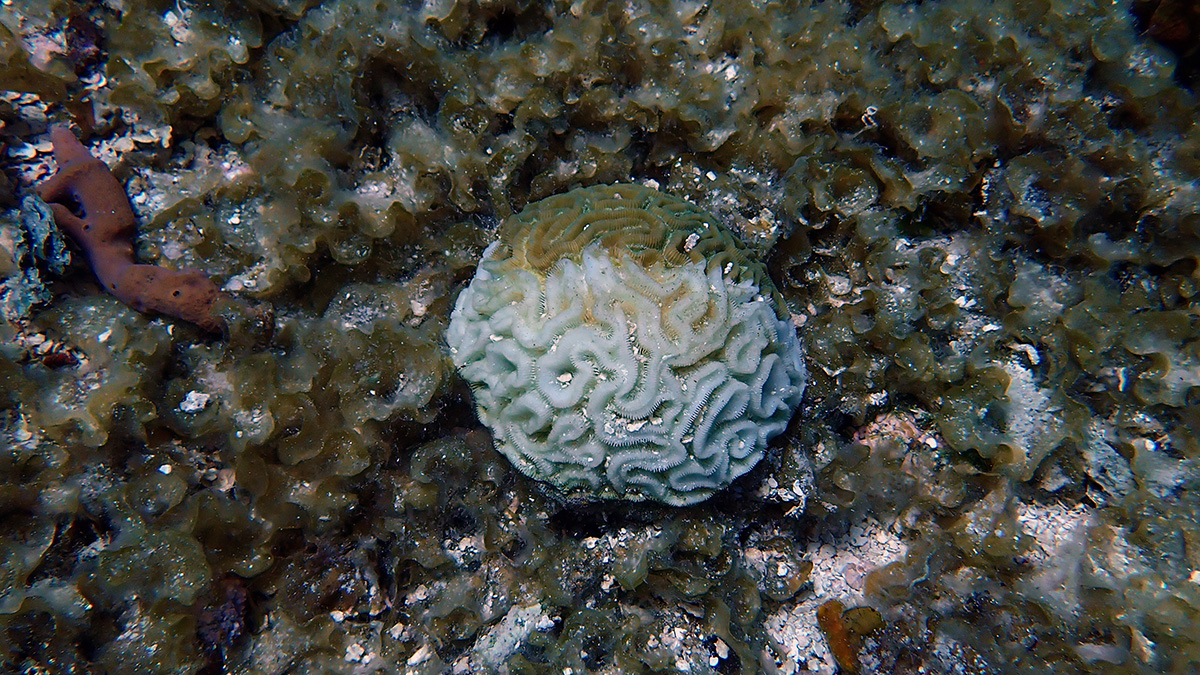
Coral disease: Stony Coral Tissue Loss Disease (SCTLD), which has caused catastrophic reef die-offs across the Caribbean, has been detected in the region. Monitoring and early intervention are critical.
Climate change: Rising sea temperatures cause coral bleaching events, which weaken or kill coral colonies. Cozumel's reefs have shown resilience relative to other Caribbean systems, but that resilience is not unlimited.
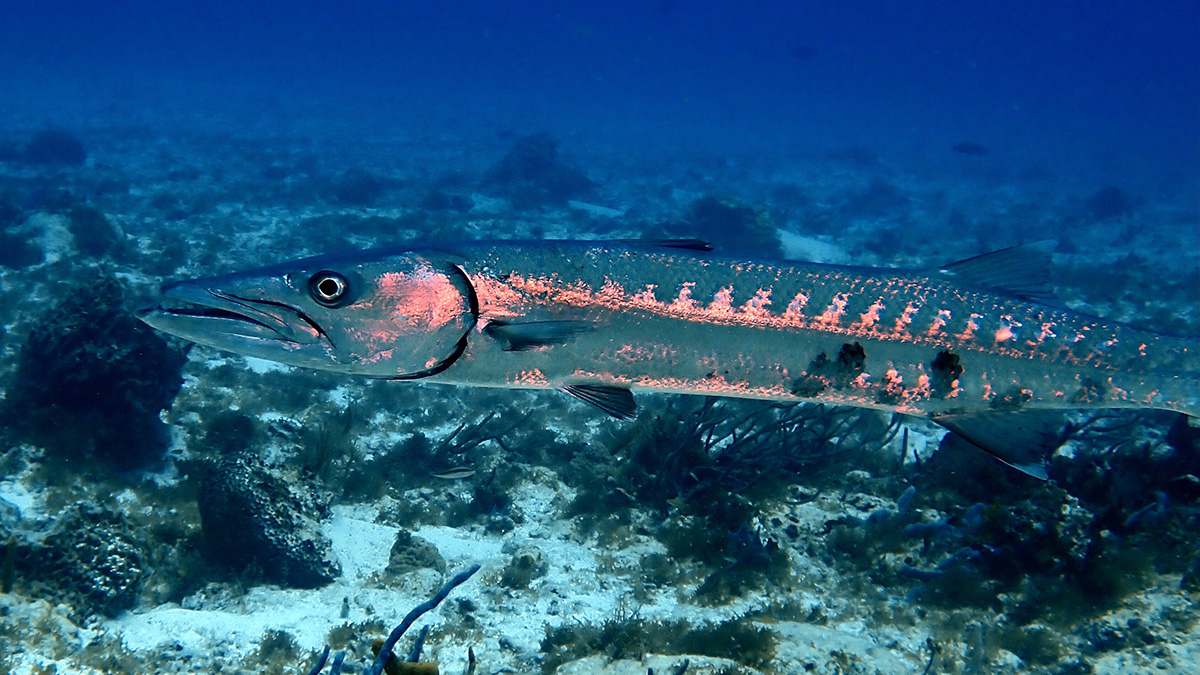
Spear fishing and illegal poaching: The species bearing the highest ecological cost are parrotfish, grouper, and spiny lobster. When parrotfish disappear, algae colonise open reef surfaces faster than coral can recruit, locking the reef into a degraded state.
History of the Cozumel Marine Park and the fight to save its reefs
1956: Mexican director René Cardona films Un Mundo Nuevo underwater off Cozumel — the film that genuinely put the island on the diving map. It was directly inspired by Jacques Cousteau's film Le Monde du Silence.
1957: Un Mundo Nuevo was released in Mexico City, becoming the first film to showcase Cozumel's underwater world to a mass audience. Dubbed into English for US television as The New World the following year, it triggers a wave of international diving interest in the island.
1961: The first cruise ship to call on Cozumel is the Ariadne — a 239-passenger vessel ferrying tourists ashore by tender, as the island had no pier. The diving tourism economy begins to take shape around the same period, with the first dive shops opening on the island.
1960s–70s: Black coral populations on Cozumel's deeper reefs begin a decades-long decline due to overharvesting, an early warning sign of what unregulated extraction would cost the reef system. In the 1970s, Jacques Cousteau visits Cozumel, drawn by the crystal-clear waters and the Mesoamerican Barrier Reef, contributing to its growing international fame as an underwater wonder.
1982: Marine biologist Dr. Germán Mendez first dives Cozumel's reefs and begins documenting their condition — work that will eventually lead to the founding of the Cozumel Coral Reef Restoration Program three decades later.
1994: The Mexican government builds the International Cruise Terminal on the island, redrawing the marine park boundary southward to accommodate it — shrinking the park before it is even formally established. The cruise ship dock construction killed nearly 97% of the surrounding coral, excluding the Villa Blanca reefs from protection. Determined to act, Dr. Mendez leaves Cozumel to pursue a marine biology degree in Florida.
1996: The Cozumel Marine Park is officially established by presidential decree, codifying federal protection for the reef system. The boundary, however, remains as redrawn two years prior.
2013: During the ScubaFest event, an underwater bust of Jacques Cousteau is unveiled and placed on the shallow bottom of Villa Blanca Reef. Dr. Mendez returns to Cozumel and founds the Cozumel Coral Reef Restoration Program (CCRRP), with a mission to grow coral in nurseries and replant it on degraded sections of reef.
2016: In 2016, Cozumel was officially designated a UNESCO Biosphere Reserve under the Man and the Biosphere (MAB) Programme, recognising the island's extraordinary ecological complexity. The designation establishes a zoned conservation framework requiring sustainable development and science-based management to coexist with human activity — a particular challenge given that Cozumel is the only Biosphere Reserve on the planet with a functioning city and permanent population living within its boundaries.
2017: CCRRP is formally established as a Mexican non-profit (Asociación Civil), allowing it to receive international volunteers and scale its restoration work.
2018: On November 30, 2018, The Ministry of Environment and Natural Resources (SEMARNAT) grants a 15-year coastal concession over a strip of landfor ornamental use: beach umbrellas and sun loungers, with no construction and no commercial activity permitted. The concession is quietly issued with links to Muelles del Caribe, a company controlled by the Molina Caseres family — a Yucatán business dynasty that has held cruise pier and ferry concessions on Cozumel since the 1960s and today owns more than 100 companies across the region.
Sadly too in 2018, Stony Coral Tissue Loss Disease (SCTLD) wipes out 60% of Cozumel corals. First discovered in Miami, it is suspected that it was carried against the ocean currents from Miami via ballast water from the cruise ships, since they sail against the currents from Miami to Cozumel.
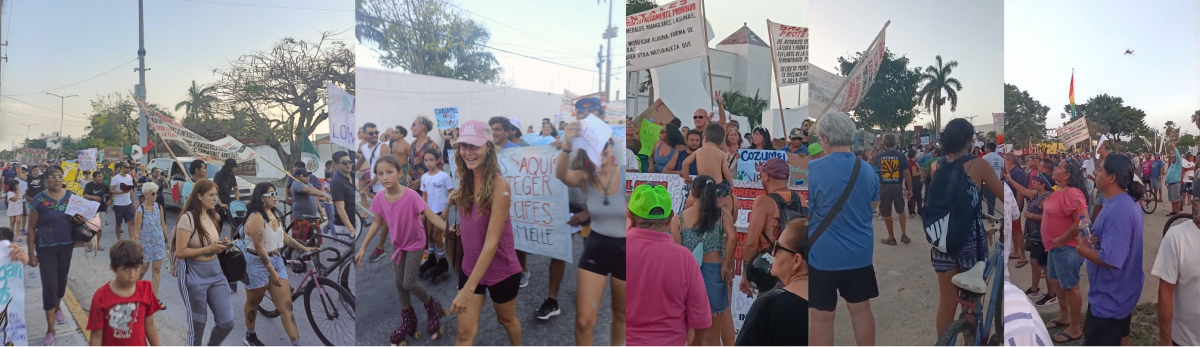
2020: The "Muelle Cozumel, Terminal de Cruceros" is announced as one of 39 priority projects in a federal economic reactivation agreement signed by President López Obrador with the private sector. Muelles del Caribe simultaneously submits its Environmental Impact Assessment (MIA) to SEMARNAT. The L-shaped pier built on 774 steel piles would be able to dock the new mega ships up to 362 metres long. The pier would be built right on top of Villa Blanca reef, where the CCRRP was actively trying to rebuild it .
2021: Dr. Germán Méndez requests a public consultation, which runs for nearly a month and receives more than 240 comments — all against the project. All were ignored by SEMARNAT.
2022: The project is suspended by federal court injunction following a complaint filed by a collective of Cozumel islanders. (Colectivo Ciudadano Isla Cozumel) on human rights and environmental grounds with local protests on the island.
2023: With the original judge on leave, the case is reassigned to an auxiliary court in another state. The new judge dismisses the entire case — ruling the Cozumel residents had failed to prove they lived on the island, despite presenting official identity documents. The ruling is upheld on appeal, clearing the legal path for construction.
2025: Survey platforms appear on the reef on April 20 starting to drill holes in the seabed. Months of community protests and legal action follow. Social media erupts with complaints to the governor, Mara Lezama Espinosa, and the President, Claudia Sheinbaum. On September 19, 2025, SEMARNAT temporarily suspends the environmental impact authorization for the project. It is a temporary victory, though conservationists remain cautious.
For a ground-level account of the 2025 pier conflict told by the people who fought it, read Cozumel Marine Park History: The Fight to Save Its Reefs from Cruise Terminals.
2026: A win for the reefs of Cozumel! SEMARNAT has officially rejected the authorization for the Fourth Cruise Pier project. The case is now archived and permanently closed, so the Villa Blanca reef is now safe.
For a ground-level account of the 2025 pier conflict told by the people who fought it, read Cozumel Marine Park History: The Fight to Save Its Reefs from Cruise Terminals.
Conservation Efforts To Restore Cozumel's Reefs
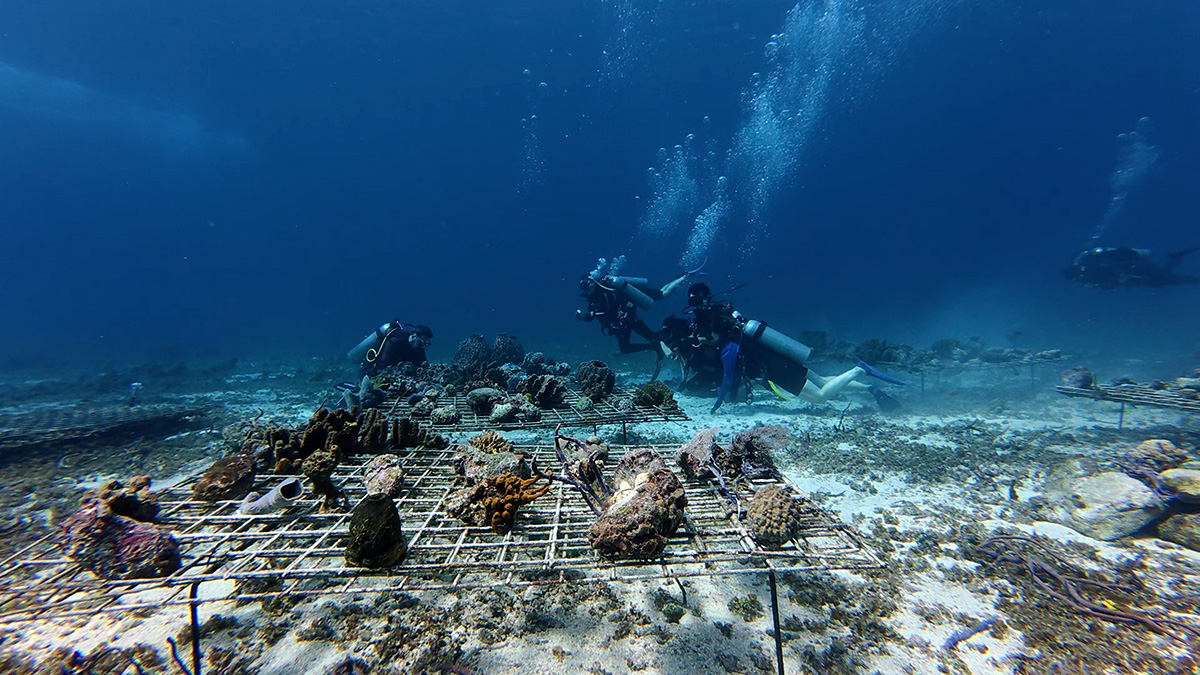
The Cozumel Coral Reef Restoration Program is the primary active restoration effort on the island. Since 2013, CCRRP has:
- Built 29 coral restoration platforms on the reef
- Planted over 10,000 coral fragments, focusing on Staghorn and Elkhorn species
- Run educational programs for both international visitors and local Cozumeleños
- Partnered with universities and research organizations to study coral reproduction and disease resistance
The program operates on the principle that education and active participation — not just protected status — is what sustains a reef long term. International volunteers and travelers who join their programs don't just observe: they contribute directly to restoration work that outlasts their visit. To understand how ocean restoration travel works across the Caribbean and beyond, read our Ocean Restoration Travel: Complete Guide.
How to Visit the Cozumel Marine Park Responsibly
Choose operators who enforce the rules. Reef-safe sunscreen only (no oxybenzone or octinoxate), no touching coral or marine life, boats that use mooring buoys rather than anchoring. Ask before you book. Pick dive centers with green fins certifications .
Go slower, stay longer. Day-trip cruise passengers account for the majority of visitor volume and spend the least time on the water. Staying on the island, diving or snorkeling with a local operator, and eating at locally-owned restaurants distributes your spend where it matters most.
Get directly involved. Through Canopi's partnership with CCRRP, you can do more than observe the reef — you can actively help restore it.
- Cozumel Coral Reef Restoration Course - If you have your PADI Open Water, why not dive with a purpose? Take the 2 day coral restoration course . You'll learn about corals, the threats they are facing and you get to plant your own coral.
- Cozumel Fish ID Course - Learn about the different species of fish and their roles that they inhabit the reefs of Cozumel. Spot them on your dives. Proceeds from the course go towards funding CCRRP's work.


Frequently Asked Questions
Is there an entry fee for the Cozumel Marine Park?
Yes — the marine park charges a daily fee for divers and snorkelers, which goes toward park management and conservation. Your dive or snorkel operator will typically include this in their pricing. Confirm at booking.
What is the best time of year to visit?
Visibility and conditions are generally excellent year-round due to Cozumel's currents. November through April tends to offer the calmest seas and clearest skies. Hurricane season runs June through October, though significant storms directly hitting Cozumel are uncommon.
Can beginners dive in the Cozumel Marine Park?
Yes. Many of Cozumel's most celebrated dive sites are shallow enough for beginners, and strong currents do most of the work. The CCRRP's Coral Reef Conservation Course is specifically designed to welcome people without prior dive experience.
What happened to the proposed fourth cruise pier?
Mexico's federal environmental authority Semarnat revoked the environmental impact authorization for the fourth pier on September 19, 2025, following sustained community protest. The project has been removed from the port authority's master plan, though conservationists continue monitoring for renewed development pressure.
Why is Cozumel's reef considered so important globally?
Cozumel sits within the Mesoamerican Reef — the second-largest barrier reef in the world. It hosts living populations of Staghorn and Elkhorn coral that are functionally extinct elsewhere in the Caribbean, making it one of the most important remaining genetic reservoirs for reef recovery across the region.
How is the CCRRP funded?
The Cozumel Coral Reef Restoration Program is a Mexican non-profit that relies on a combination of volunteer program fees, research partnerships, and support from platforms like Canopi. When you book a restoration experience through Canopi, your participation directly funds CCRRP's ongoing reef work.
What is regenerative travel and how does it apply here?
Regenerative travel goes beyond minimizing harm, it means your visit actively contributes to the restoration of a place. Joining a CCRRP reef planting session, staying with locally-owned operators, and choosing experiences that fund conservation is what regenerative travel looks like in practice in Cozumel. Read our step-by-step guide: How to Book Sustainable Travel Experiences That Actually Make a Difference.