

Regenerative Travel vs Eco Tourism — What's the Difference, and Why It Matters
I excitedly shared a reel on Instagram this week, talking about the why behind our Canopi launch. There's one sentence in that video that keeps echoing in my head.
"Imagine a world where every journey you take, leaves the world better, just 'cause you were there."
This to me, is what regenerative travel looks like when it becomes mainstream.
What gives me confidence in our ability to chip away at this vision is the rise — especially on social media — of the conscious traveller. And I sincerely believe that the future of conscious travel belongs to regeneration. Maybe that can be the name of the next generation of kids born to us — GenRe ;)
Travel has evolved, and so have we
After 40-odd years of travelling the globe, I've watched the travel industry evolve firsthand. The most significant shift of the past three decades has been the rise of eco tourism — the idea that you could visit natural places, spend money locally, and leave no trace. Travel without damage. A bar that felt radical when it was introduced in the 1990s.
And eco tourism has done real things. It established that responsible travel was possible. It redirected money into local communities. It made travellers think twice about where they were going and what they were funding.
But after watching this space for 40 years, I'll be honest: eco tourism has a ceiling.
Leaving no trace is a passive standard. It assumes the baseline is intact — that the reef is healthy, the forest is standing, the wildlife is thriving. All we need to do is not disturb it.
Most baselines are no longer intact.
Over 50% of the world's coral reefs have died since 1950. Tropical forests are disappearing faster than at any period in recorded history. Species are going extinct at rates 100 to 1,000 times the natural background level. In this context, travelling carefully and leaving the ecosystem exactly as you found it is — by definition — not enough anymore.
Although… let's be honest. I still suspect most people skip the "offset carbon emissions" checkbox when they book flights — and who can blame them? It's rarely clear what those credits actually do.
And that's the point: so many opportunities lie in understanding our choices. That's why I'm so energised by this movement that goes far beyond traditional sustainable tourism. It's called regenerative travel, and it's reshaping how we think about our journeys, our impact, and our relationship with the planet.
At Canopi, we believe regenerative travel isn't just a trend — it's a new category. One we hope to create, define, and ultimately lead.

So what's the difference? Eco tourism, sustainable travel, and regenerative travel
Let me lay these out clearly, because they get conflated a lot.
Eco tourism minimises harm. Don't disturb wildlife. Stay in low-impact accommodation. Use local guides. Leave no trace. The goal is to reduce the negative.
Sustainable travel extends this. Reduce your carbon footprint. Support circular economies. Choose operators who conserve water and waste. The goal is to maintain what exists.
Regenerative travel flips the question entirely. Instead of asking how do we do less damage?, it asks how do we actively restore? The goal is to leave the ecosystem — the reef, the forest, the community — in measurably better shape than you found it.
Simply put: sustainable travel focuses on minimising harm, and regenerative travel focuses on doing more good. Restoring ecosystems, supporting community wellbeing, funding the people who are literally rebuilding what's been lost.
Once we started digging into the types of regenerative travel experiences already happening around the world, we uncovered a lot. People can already take part in things like:
• Biodiversity and ocean restoration projects
• Partnerships with local NGOs doing active habitat repair
• Wildlife conservation visits run by the communities protecting the habitat
• Coral restoration dives alongside the scientists monitoring the reefs
Where sustainable tourism preserves, regenerative tourism heals, rebuilds, and revitalises.
What regenerative travel looks like in practice
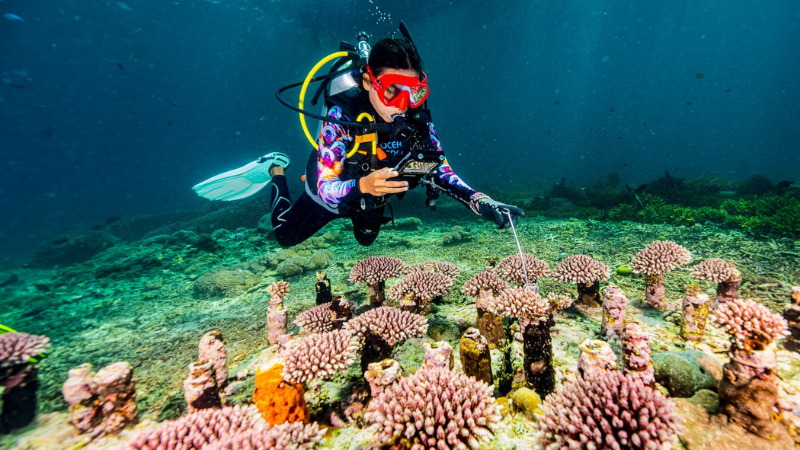
A concrete example: Ocean Gardener operates coral nurseries in Nusa Penida, Bali — growing fragments of living coral on underwater frames until they're mature enough to transplant to degraded reef areas. When you book a coral restoration snorkel tour through Canopi, you're not watching them work. You're working alongside them. And your booking fee funds the programme directly. Read more in our Bali coral restoration guide.
In the Yucatan, the community running the Punta Laguna spider monkey sanctuary has been protecting that forest for generations. The visitor fees they earn through Canopi fund the protection directly — not a corporate intermediary, not a carbon credit scheme with no verification. The community, the forest, the animals. Directly.
NGOs are at the heart of Canopi's approach
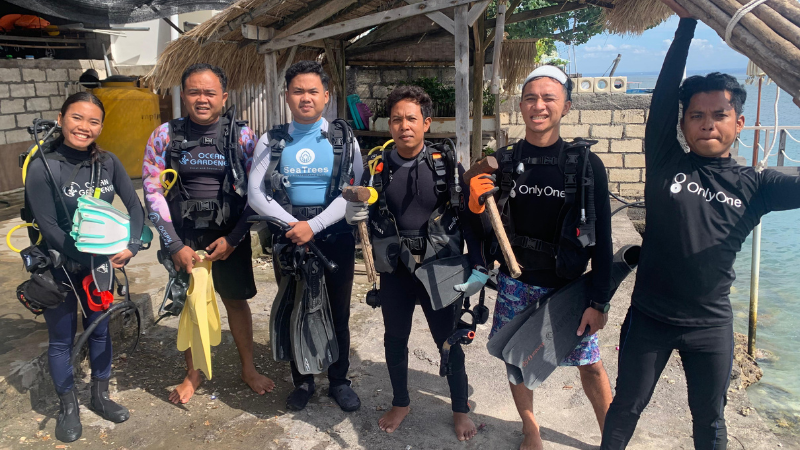
NGOs are doing the regeneration — we’re helping travelers fund it.
All around the world, NGOs are restoring ecosystems, protecting biodiversity, rebuilding cultural heritage, and literally healing the planet. Many of them rely on selling travel experiences as their funding model. Our belief is simple:
If we can route more travel dollars into the hands of these NGOs, we can accelerate real regeneration at scale.
This is why traceability matters so much to us. The best regenerative travel companies are the ones that can show exactly where the money went — which NGO received it, what they did with it, what changed in the ecosystem as a result. Not just a mission statement. Field evidence.
I'll share more about our NGO partnerships in future posts. But the truth is this: our mission to harness the power of travel to regenerate the world only works if NGOs are at the centre of it.
Regeneration beyond the trip
One thing that's become clear to us at Canopi: the most powerful version of regenerative travel doesn't end when you fly home.
A single trip — however impactful — is still a single injection of funding into an ecosystem that needs sustained support year-round. Coral reefs don't stop needing restoration between tourist seasons. Forests don't pause their recovery while the eco lodges are closed.
This is why we're building Adoptables — a way to adopt a named coral fragment in Bali or a tree in the Yucatan for $5/month, and receive monthly field updates from the NGO caring for it. It extends the regenerative relationship across years, not just days. And if you want to meet what you've been funding — you can book a trip and visit it.
Launching June 28. Join the waitlist here.
The future of travel: Regeneration
This is our big bet: that today's eco tourism wave will give rise to tomorrow's regenerative travel movement. And when that wave crests, Canopi will be ready to serve the conscious traveller.
Regeneration is the natural next step of sustainability. We hope Canopi will be the driving force of this shift. So if you're curious, hopeful, and ready to travel with purpose — come join the early wave of regenerative travellers.
This is your invitation.
Explore. Restore. Regenerate.
— Sharad